
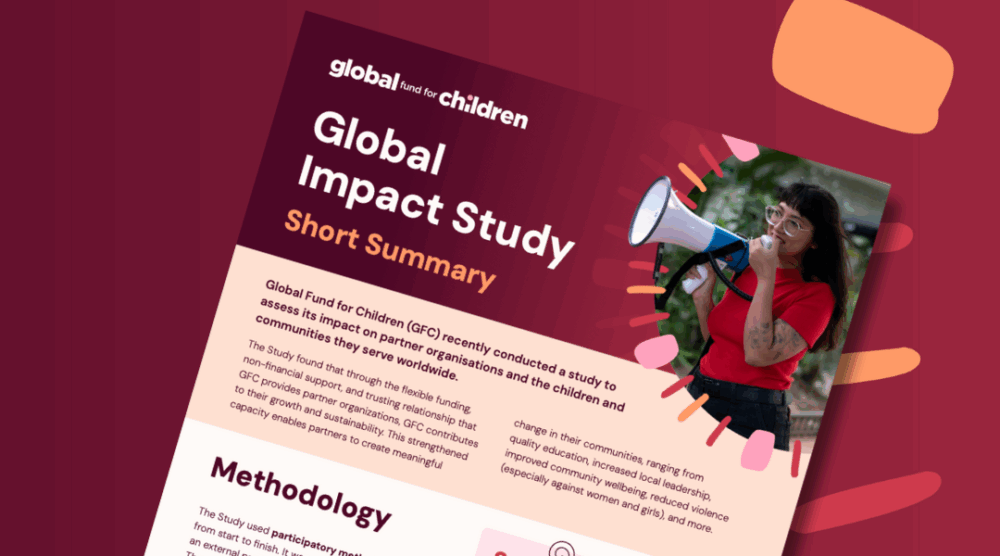
5-minute read
Short Summary
Topline overview of the Global Impact Study and its findings.
Global Impact Study:
Global Fund for Children’s Global Impact Study is a deep investigation into the difference our work is making for children, young people, and communities around the world.
For the first time in our 30-year history, we had the opportunity to examine what we do, why it matters, and the impact our model of support is having globally. Here’s what the study revealed about the role Global Fund for Children has played in making this impact possible.
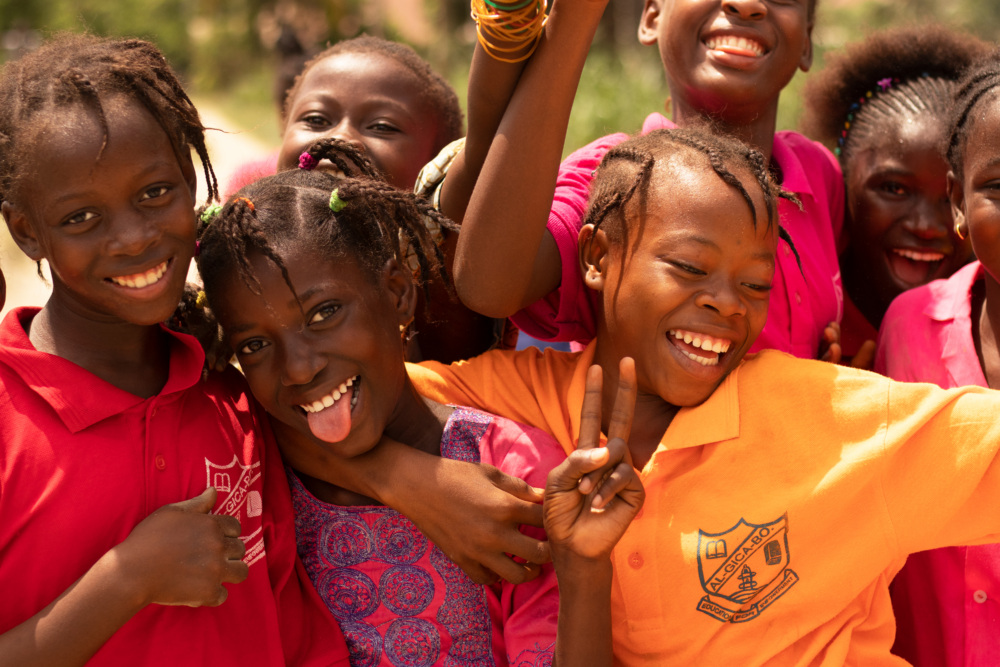
For community-based organizations change is…
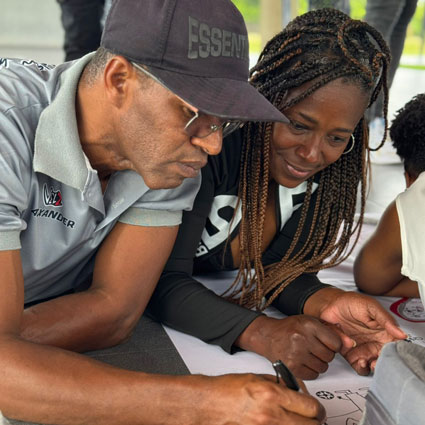
It doesn’t fit neatly into simple metrics and reporting.
The most meaningful change often happens gradually, in ways traditional evaluation struggles to capture.
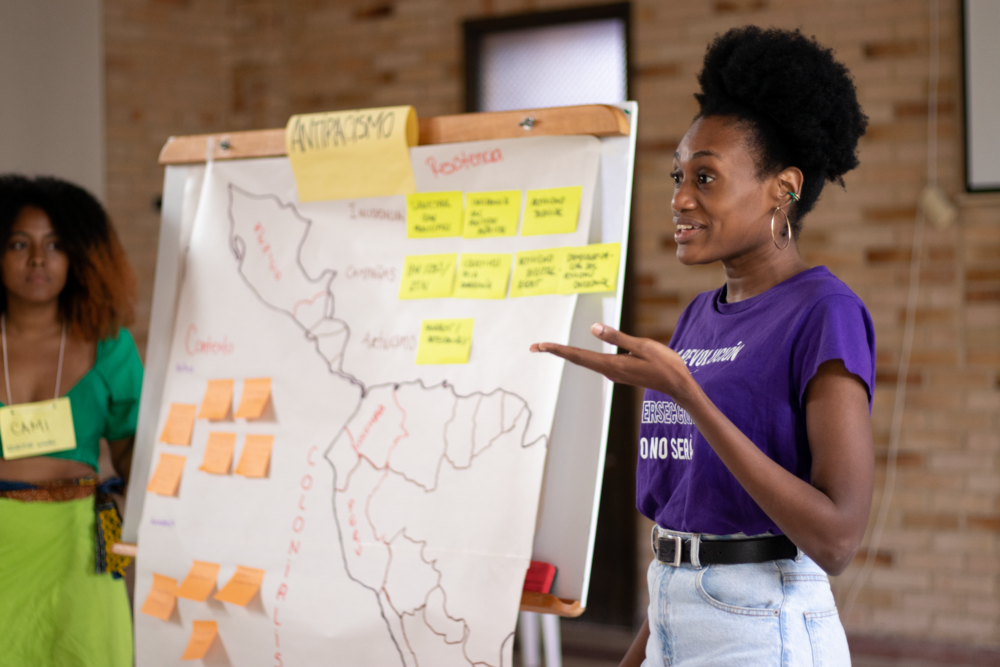
WE LISTENED.
This isn’t just about data. It’s about listening to partners. Learning from their experiences. Seeing patterns across stories, communities, and contexts.
After 30 years of supporting community-based organizations around the world, we finally had the resources and capacity to step back and ask some fundamental questions: Why does our model matter? And what impact are we actually having?
The study found that GFC contributes to the growth and sustainability of local organizations, and through this strengthened capacity they create meaningful change in their communities; quality education, increased local leadership, improved community wellbeing, reduced violence, and more.
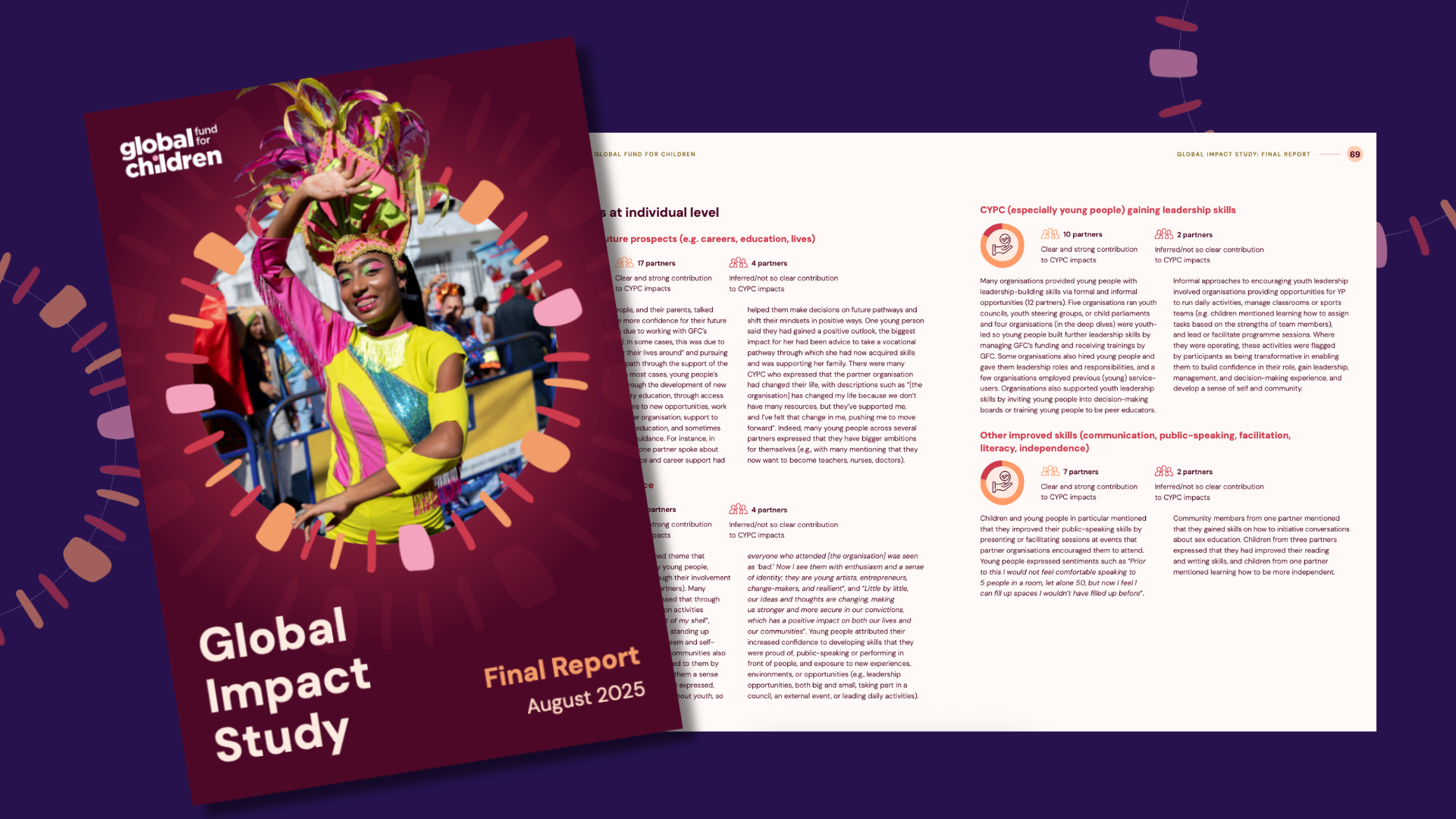
The study involved:

Researchers
Across 27 countries
Months to conduct the research
Partners organizations researched
Interviews conducted
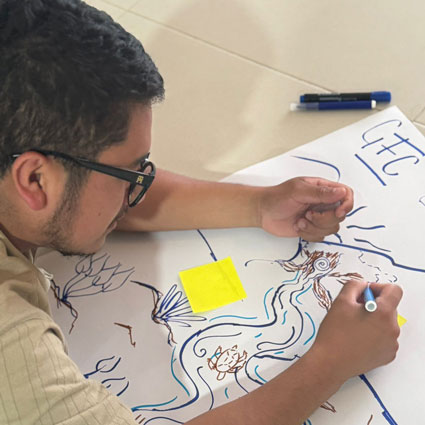
Creative research exercises*
*photos, drawings, videos, journals, mindmaps, and movement activities in response to research questions
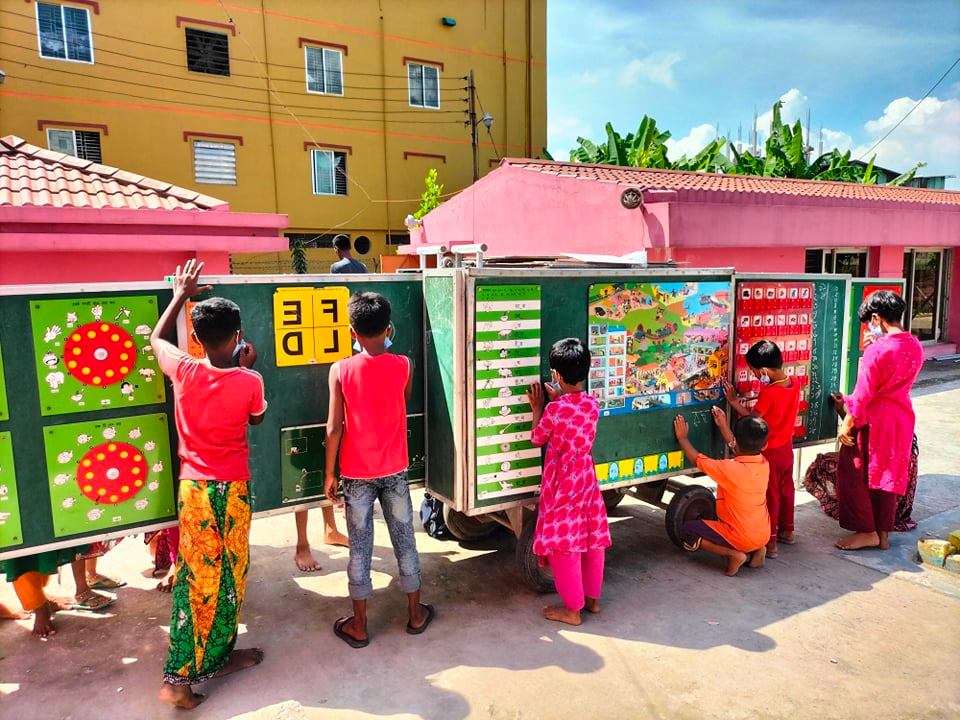
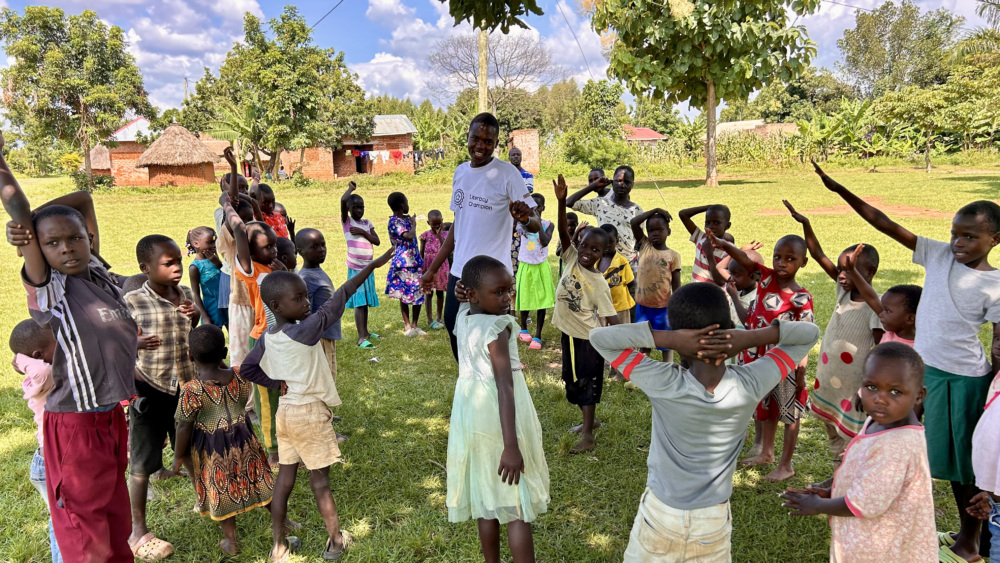
What emerges from the findings is clear:

The findings
GFC respects partner expertise, responds quickly, engages through in-person visits, communicates openly and frequently, and demonstrates flexibility, patience, and shared values.
— Community-based organization leader

The findings
GFC provides grants that allow partners to set their own spending priorities, with light reporting requirements and timely disbursement of funds.
— Community-based organization leader

The findings
GFC provides networking opportunities and organisational development support, including safeguarding, fundraising, monitoring and evaluation, wellbeing, and more.
The ways GFC supports partners are deeply interconnected.
Trust underpins flexible funding, which works alongside tailored non-financial support. Partners rarely distinguish between these elements; instead, they experience them as a cohesive approach. Together—trust, flexible funding, and non-financial support—drive impact.
5-minute read
Topline overview of the Global Impact Study and its findings.
15-minute read
For those who want to really understand the study and the details of the findings, but may not have the time for the full report.
2-hour read
For those who want to know the depth of the study, the methodology, the mechanisms of how GFC's model works, nuances of the findings, case studies, and more!
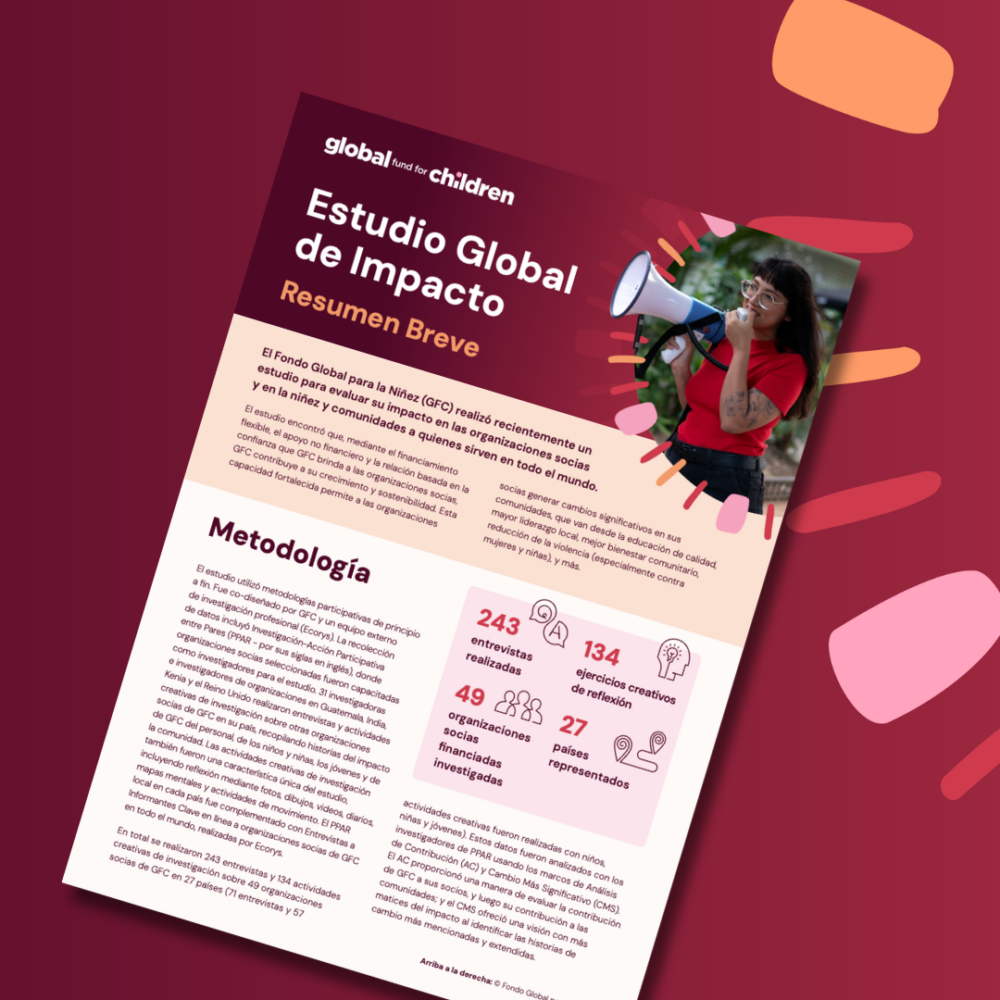
Access the report in French, Spanish and Portuguese below.

Corey Oser
Senior Vice President, Programs
Global Fund for Children
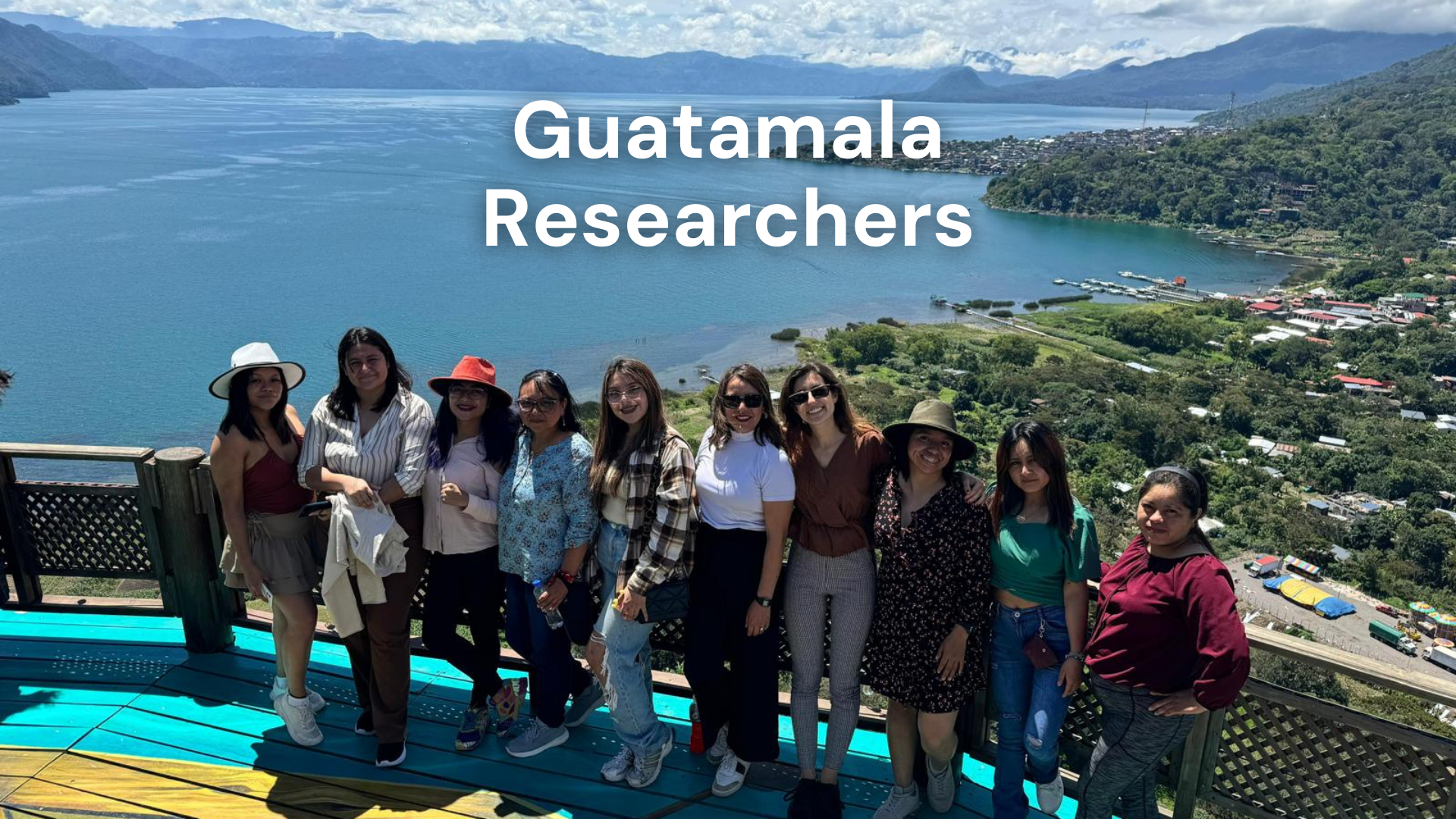
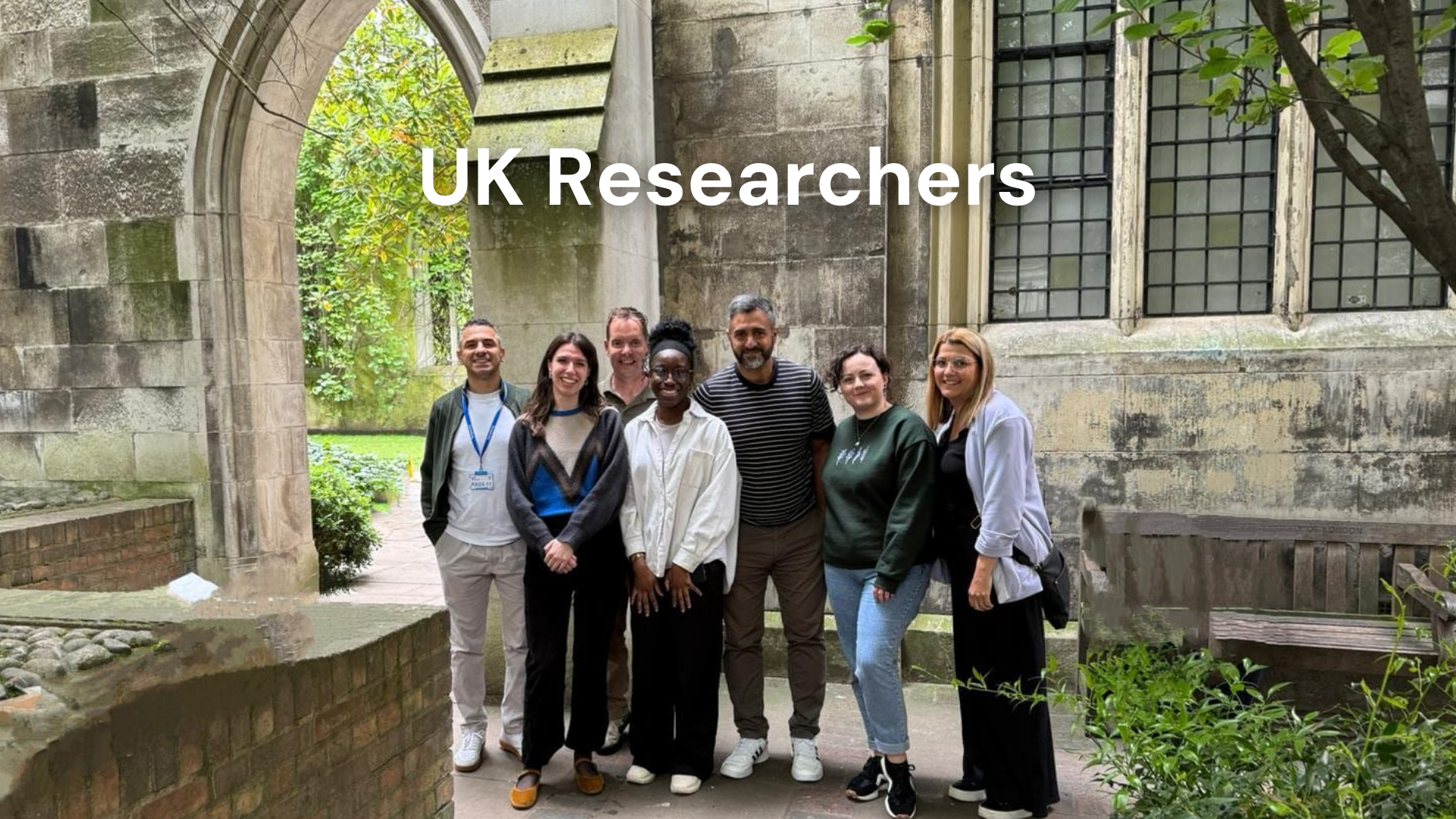
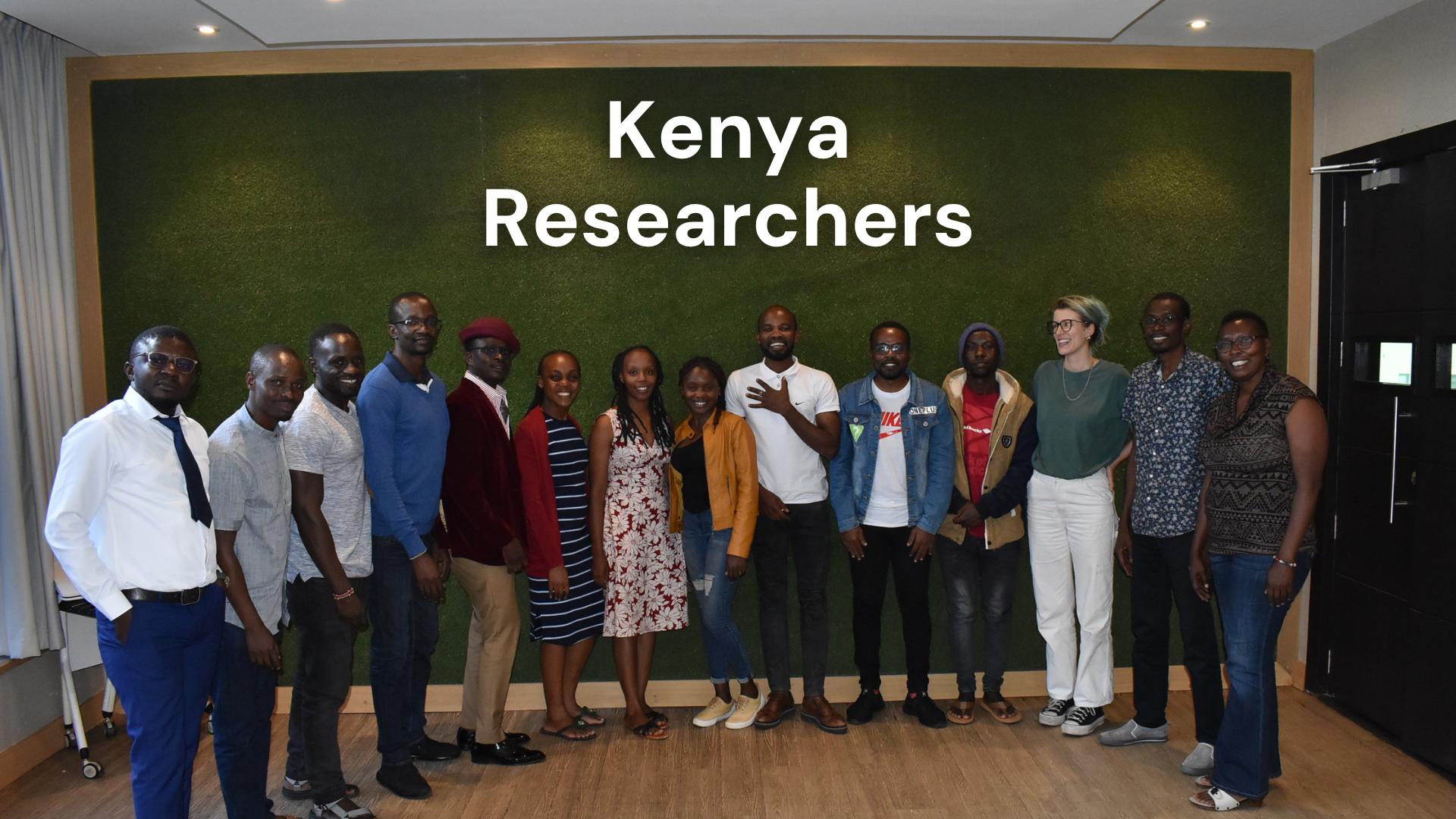
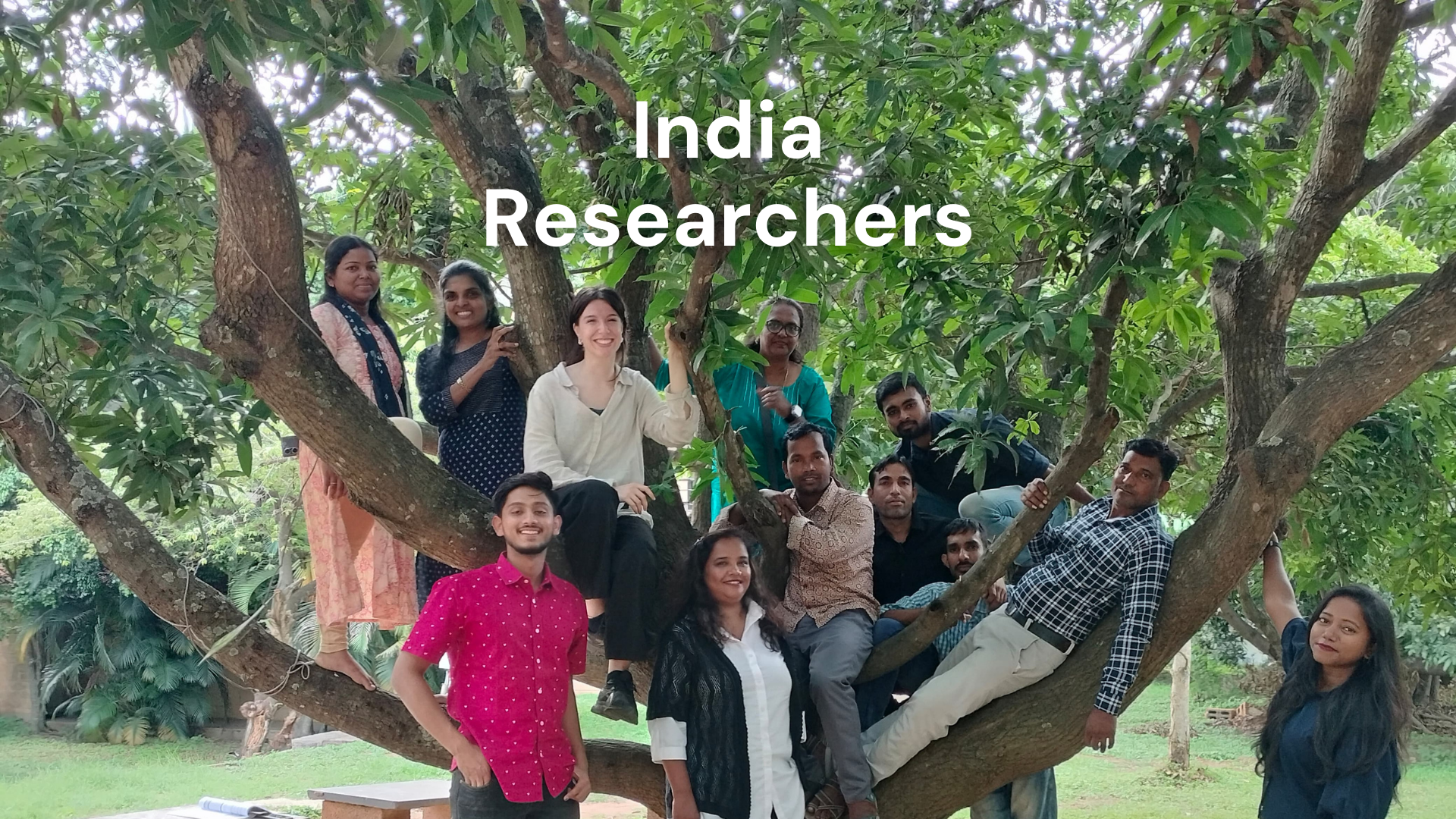
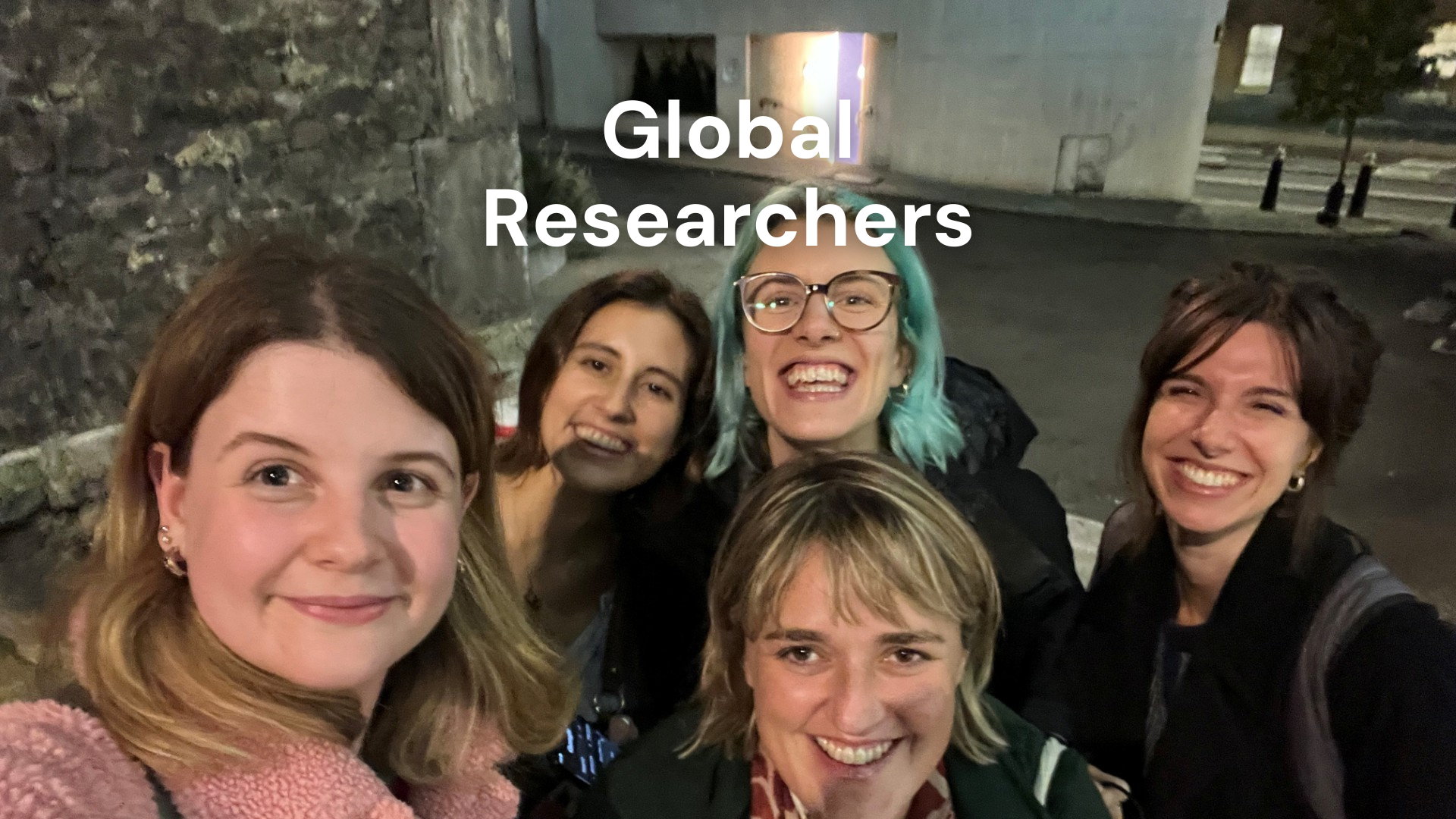
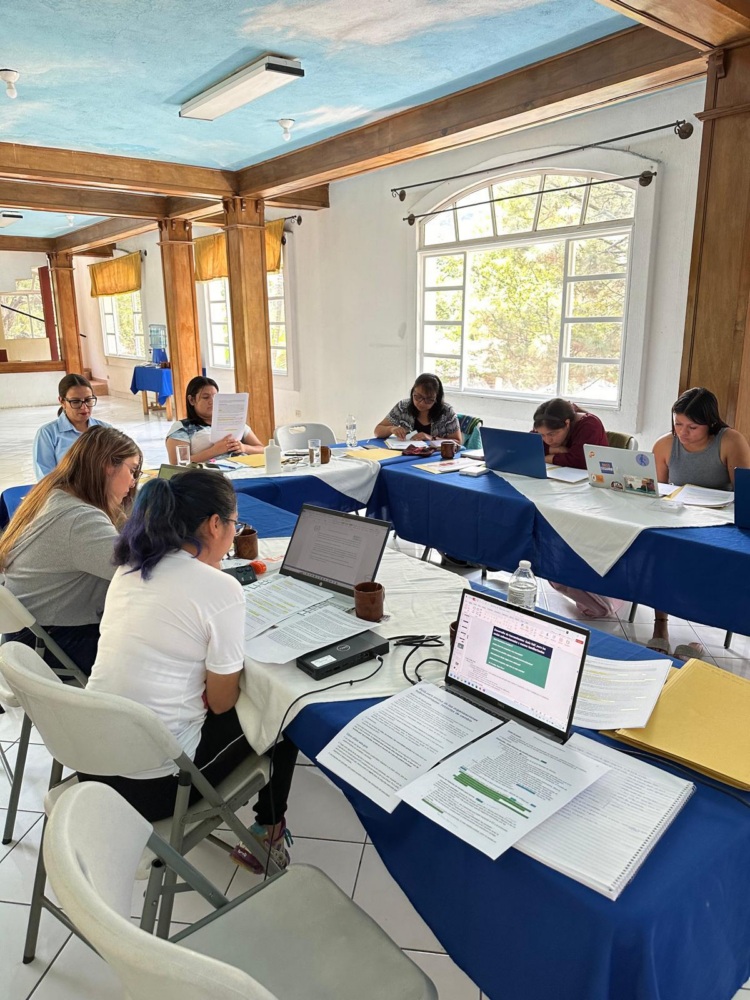
This study was co-designed by GFC and external research partner Ecorys. Rather than relying solely on external researchers, Ecorys trained 31 individuals from GFC partner organizations across Guatemala, India, Kenya, and the UK to become local peer researchers.
These peer researchers investigated GFC’s impact on other partner organizations in their respective countries. Ecorys provided support throughout and conducted additional global interviews to ensure breadth and rigor.
Why this research approach matters to GFC?
Overall, this participatory peer research approach goes beyond typical evaluation practice in the philanthropic sector and reflects GFC’s commitment to learning alongside partners, strengthening local leadership, and ensuring that evidence is shaped by community voices and lived experience.
The report has generated strong media interest, with coverage secured across six platforms, including Alliance Magazine, The Pioneer Post, the Trust-Based Philanthropy Project, The Charity CEO Podcast, The Wellness Project, and DevHub’s PowerShift podcast.
Together, this coverage has reached a potential audience of 292 million people as of 21 January 2026, helping to amplify the report’s findings and contribute to wider conversations on trust-based philanthropy.
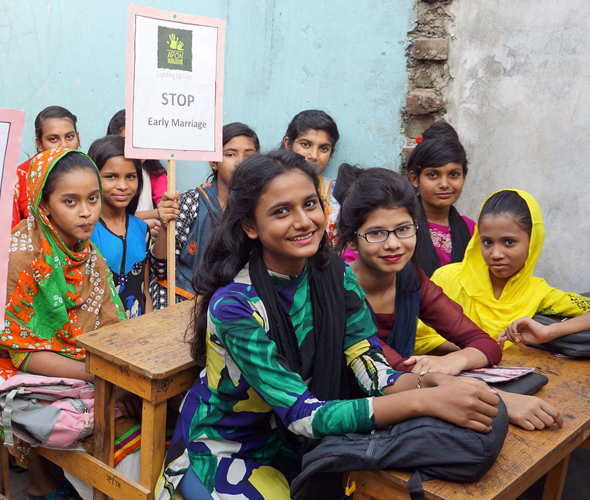
Support GFC’s proven model by investing in flexible, long-term funding that drives lasting impact for children and young people.
Evaluation doesn’t have to be extractive. Get in touch to learn more about participatory, innovative, and empowering approaches to research.
Discover how GFC’s approach—combining flexible funding, trust-based partnerships, and participatory learning—drives lasting impact for children and young people.