Gender justice
Gender justice
Editor’s note: This blog is also available in Spanish.
Fostering healthy masculinities among boys and young people is no easy task. It goes far beyond offering workshops or informational spaces. It requires activating deep processes of individual and collective reflection—processes that can lead to concrete actions promoting community well-being.
It takes patience to recognize that meaningful change takes time; courage to confront discomfort and transform attitudes and behaviors; and tenderness to understand that mistakes are part of the journey.
It asks us to continuously challenge ourselves, to stay open to discomfort, and to be generous in sharing what we learn along the way.
In this spirit, our partner organizations in GFC’s Promoting Youth Leadership for Gender Justice (HEEL) Initiative on healthy masculinities approached us last year with powerful and pressing questions:
How can we support individuals and organizations eager to actively engage boys and young men in the struggle for gender justice? How can we show them that working toward healthy masculinities is not only possible, but urgent? How can we support organizations and collectives full of motivation and commitment, but unsure of how to begin these conversations with diverse children and young people?
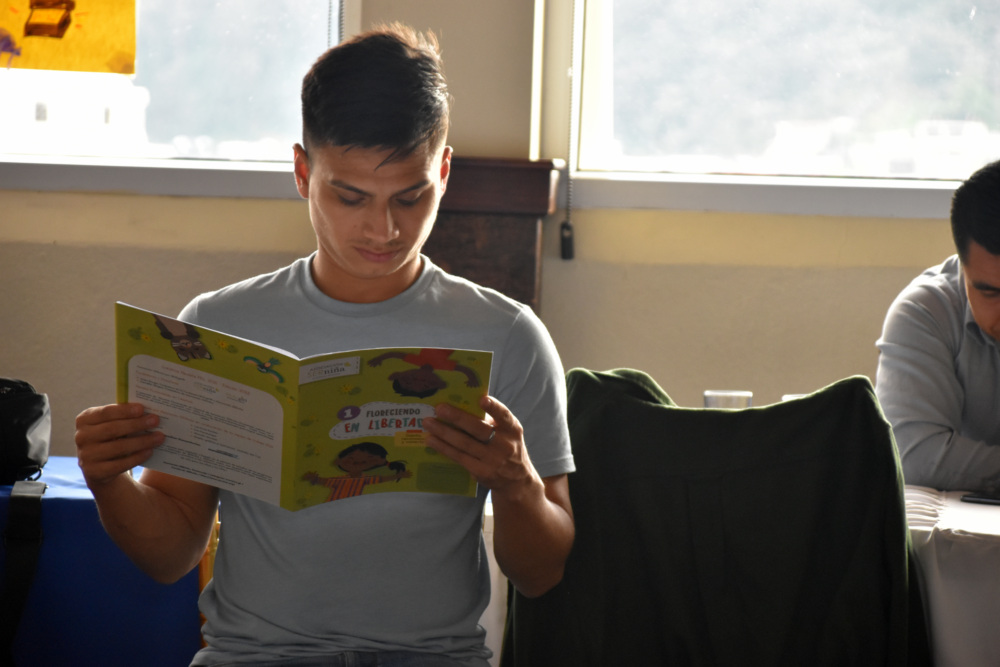
In response to these questions, GFC and its partner organizations set out on a new journey, one born from a collective dream: the co-creation of a toolkit. This toolkit, grounded in playful and participatory methodologies, was designed to offer practical entry points for engaging children and youth in conversations about healthy masculinities, centering their voices, needs, and ideas.
Our goal was to create methodologies that not only promote gender equity but also honor individual experiences and open new spaces for both personal and collective transformation.
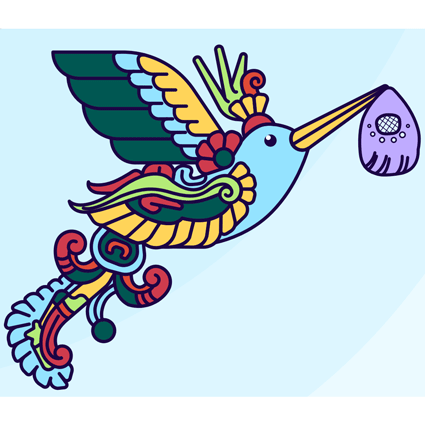
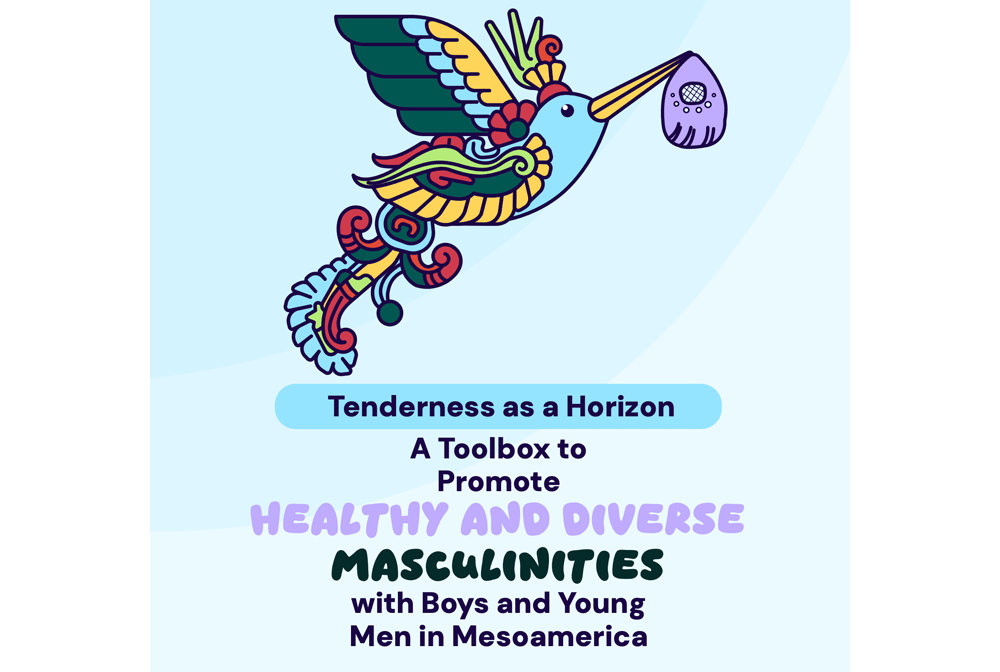
We chose to begin by honoring the hummingbird – a creature deeply significant in Mesoamerican culture. The hummingbird is more heart than body. In its tiny beak, it carries the seeds and water needed for growth. It reminds us that change may seem small or insignificant, but when it comes from the heart, it spreads quickly. It inspires us – like fire.
Our hummingbird is named Yutsil, which means “tenderness” in the Tsotsil Mayan language. That’s also the name we collectively chose for our toolkit: “Tenderness as a Horizon.” We named it this way because tenderness is what guides us: our desire to connect, to heal together, to learn together, to make mistakes together, and to recognize ourselves in one another. Without fear of being judged.
We believe that meaningful change begins by recognizing others – by seeing and valuing their experiences – in order to build a shared sense of us. A sense of community. A common purpose.
As we reflected on what we’ve learned over the past four years walking this path together, we realized that we had already developed a simple, yet powerful, model of accompaniment: our “3 Rs” model.
The first R is Recognition. This is about acknowledging what hurts us – recovering our memory of pain and violence, but also of love and hope. At this stage, we work to identify the patterns and behaviors we’ve inherited, and we reflect on their impact in our lives. We ask ourselves: How did we learn to be men? What do we want to change or unlearn in order to be better?
We begin to recognize the violence we’ve endured, the violence we’ve reproduced, and the violence we’ve normalized – simply because we were taught that’s what it means to be a man. It can be a difficult process, but one that helps us break harmful cycles. It opens the door to healing.
The second R is Relating. Here, we begin to understand that the doubts, emptiness, and pain we carry are not ours alone. We realize that making mistakes doesn’t mean we are broken or bad; it means we are human. We begin to see how patriarchal masculinity is deeply embedded in our families, our societies, our laws, and institutions from the moment we are born.
Changing ourselves also means questioning the cultural and social systems that reward us for conforming to narrow, often violent versions of masculinity, and punish us when we try to step outside of them. We begin to understand that masculinity affects everyone, and that this is a collective struggle. We must work together to challenge and transform the systems that sustain suffering and injustice.
The third R is Revolutionizing. This is the step where we move from talking about change to living it. Practicing healthy masculinity every day. Choosing to change intentionally.
That might mean caring for the environment, starting conversations with our fathers or grandfathers, asking for and offering help, or taking on caregiving roles. It’s about linking manhood to the ongoing work of preserving life. It´s about reclaiming our shared humanity.
At first, it will be challenging but we are not alone. We are here to support and hold each other. This final step is about identifying how we want to grow and committing to that journey, step by step. Transforming ourselves, and in turn, transforming our families and communities. Through dialogue. Through collective reflection.
Throughout this toolkit, you’ll find activities lovingly created by our partner organizations—designed to help expand emotional awareness, strengthen creative and expressive abilities, and invite others to be part of meaningful change. All through play, imagination, and collective creation.
This is not a step-by-step guide or instruction manual—we don’t believe in one-size-fits-all solutions. Instead, this is an invitation for children and young people to feel free, to be more authentic and joyful. To enrich their lives and their relationships.
We invite you to read it, be inspired, give it a try, make mistakes, and try again. Make it your own. Adapt it. Take what works for you.
Our hope is to spark new ideas and new dreams. This is an open and living process – a beginning, not an end.
We are deeply grateful to everyone who contributed to this journey, which feels like a collective embrace. And we’re here to support you if you’re unsure where or how to start. Help will always be available for those who act from the heart.
Because tenderness is our horizon. Our guiding light.
Gender justice
Gender justice
Gender justice