
Our Vision and Mission
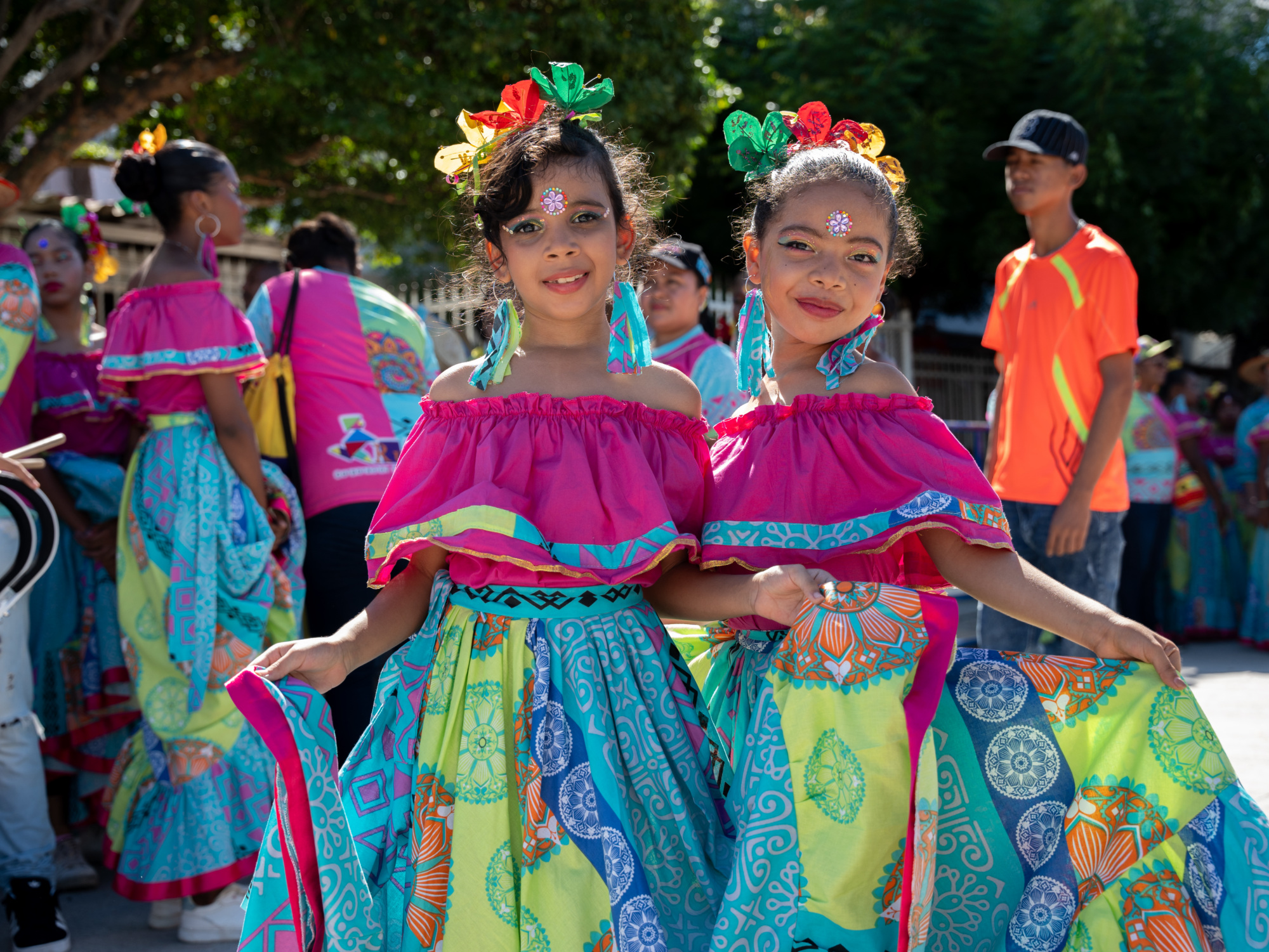
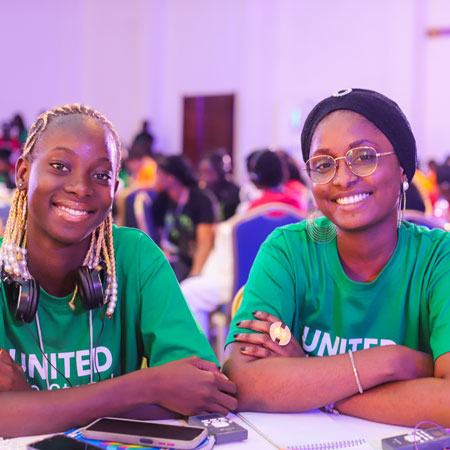
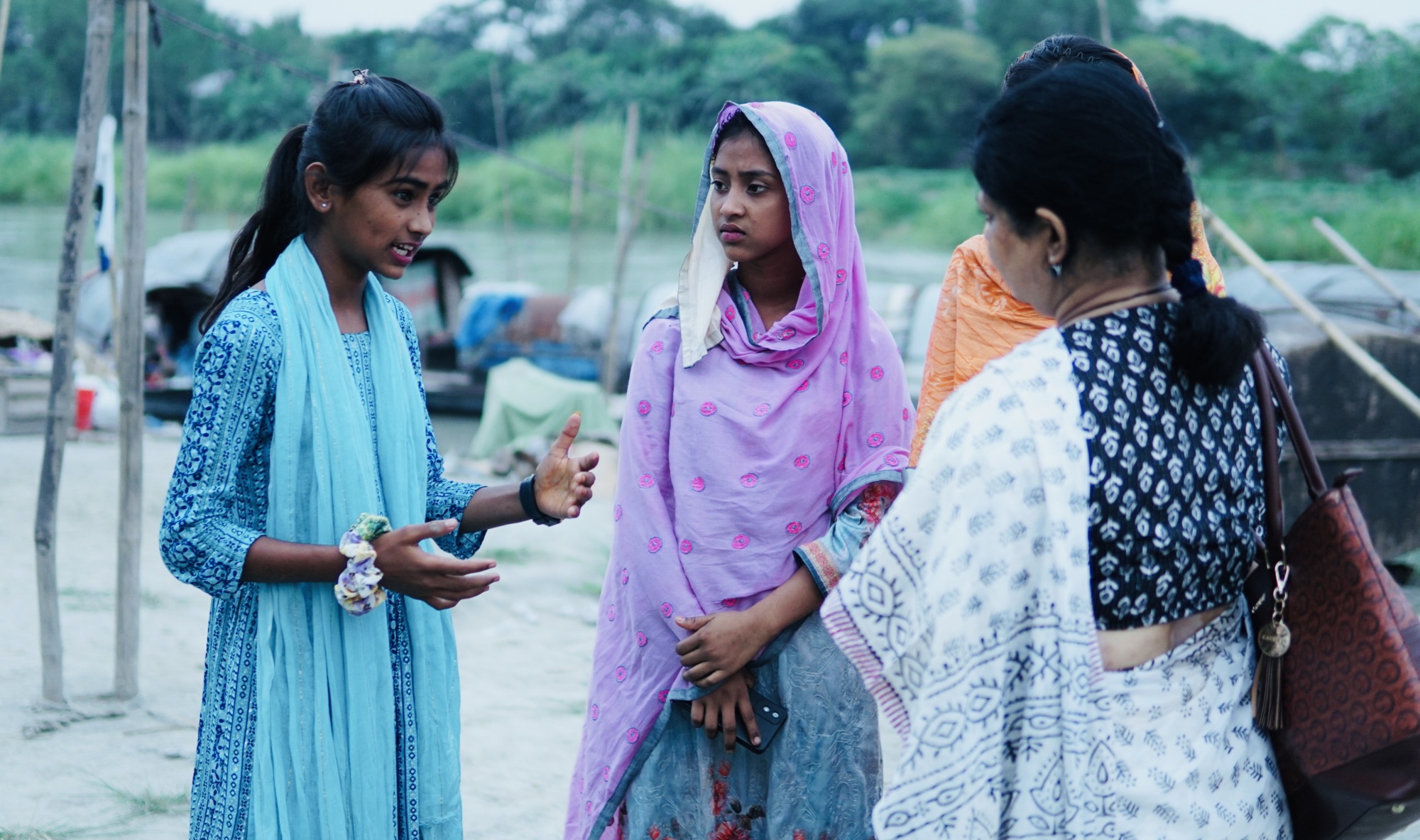
Global Fund for Children (GFC) envisions a future where all children are safe, strong, and valued.
We boldly pursue this vision by partnering with community-based organizations around the world to help children and young people access equal resources and opportunities, and live free from violence, discrimination, and exploitation.
Welcome
From the Co-CEOs
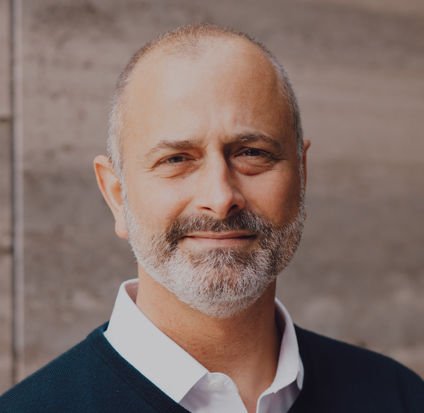
John Hecklinger
Co-CEO,
Global Fund for Children
Press play to hear directly from John
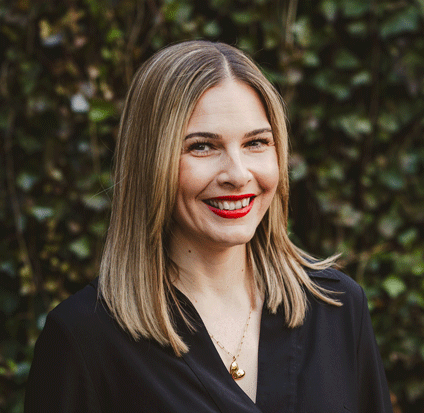
Hayley Roffey
Co-CEO,
Global Fund for Children
Press play to hear directly from Hayley
This past year was one to reckon with, and we are deeply proud that Global Fund for Children navigated it with care and courage. We saw our partners, young leaders, staff, and communities rally together to overcome challenges – including the funding freeze leveled by the US government last January, which has impacted thousands of community-based organizations and countless children and families.
Amid major changes in the philanthropic landscape, GFC pivoted to adapt while continuing to serve our partners, and the children and young people they support. In March 2025, we launched the We Stand with Children campaign to reinforce our support following the halt in global aid funding. As GFC embarks on a new five-year vision during this time of global uncertainty, we will continue to stand in solidarity with children and youth – as we have done for more than 30 years.
We invite you to listen as we reflect on the year behind us, what anchors our commitment to children and young people, and our hopes for the future.
From the Board Chairs
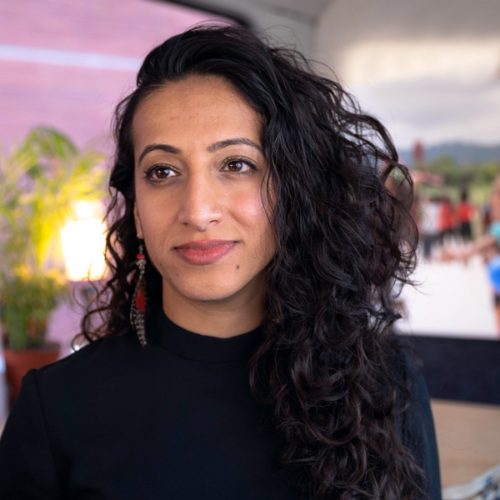
Swatee Deepak
Co-Chair,
Global Board of Directors
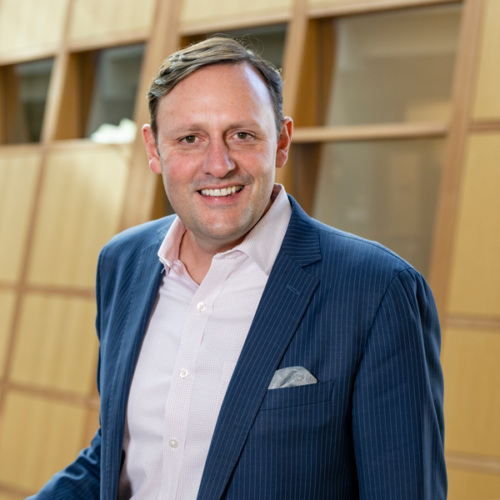
Greg Wallig
Co-Chair,
Global Board of Directors
Mark Wilson
Chair,
UK Trust Board of Trustees

Milena Rusu
Chair,
Youth Leadership Council
Reflections on the year
This year’s annual report reflects a period of profound challenge and meaningful progress – one that reaffirmed Global Fund for Children’s model. In a rapidly shifting global context, GFC remained grounded in its purpose and steadfast in its commitment to children and young people, thanks to the leadership of its team, the resilience of its partners, and the trust of its supporters.
During the year, GFC awarded over $11 million in flexible funding to 405 partner organizations across 42 countries. At a time when instability disrupted long-standing funding systems, GFC prioritized responsiveness – directing resources to partners facing acute pressure and supporting them as they adapted to new realities. Nearly 50% of partners were directly affected by external funding shocks, and GFC worked alongside them to sustain essential services, organizational continuity, and community trust.
Please watch this short video highlighting our work with children and young people, communities, and partners over the past year.
Our impact at a glance
Your support enabled these grassroots partners to assist children and families facing emergencies, help communities dismantle barriers to progress, make space for young leaders to propel change, and so much more.
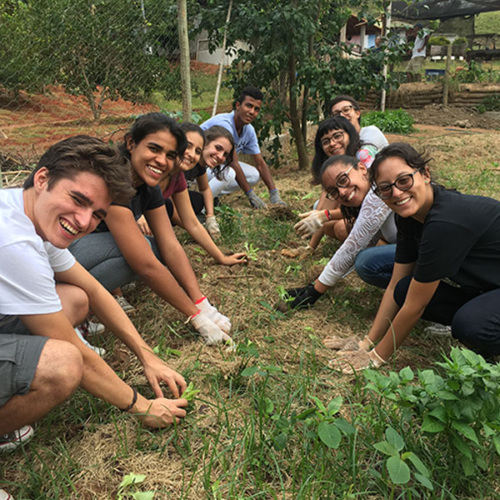
Disbursed across 654 grants

Countries across Latin America, Africa, Europe and Central Asia, and South and East Asia

Partner organizations, including emergency grant recipients
of our partners are youth-led
*These numbers do not include GFC’s Phoenix Way partners
of our partners are women-led
*These numbers do not include GFC’s Phoenix Way partners
of our partners are led by young women
*These numbers do not include GFC’s Phoenix Way partners
New community-based partners
We were pleased to welcome 125 new partners based in 10 countries across the globe, including Mexico, Hungary, and Vietnam.
GFC Initiatives
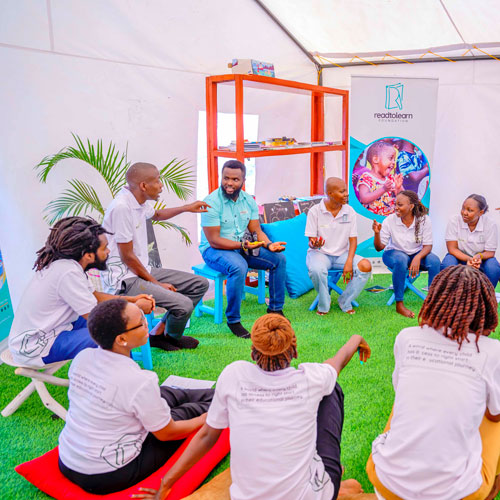
In the past fiscal year, we convened 20 initiatives that brought together community-based organizations working on shared challenges – such as advancing girls’ rights, supporting youth leadership, protecting the environment, and strengthening social justice – across the globe.
Net Promoter Score
Our partners say we deliver on our promises.
When asked whether GFC does what it says it will do, we earned a Net Promoter Score of 86 (on a scale from –100 to +100). In practice, this means the vast majority of our community-based partners rated our dependability a 9 or 10 out of 10.
*Net Promoter Score (NPS) is a tool that helps us measure how satisfied our partners are with their relationship with GFC.
Convenings and workshops
We organized 198 gatherings to foster collaboration among partners addressing similar issues or working within the same region. Convenings and workshops provide opportunities for partners to expand their knowledge, exchange insights, and strengthen networks.
These events are part of the holistic, wraparound support that our programs team provides to our partners, along with critical flexible funding.
We Stand with Children
Across our six focus areas – education, gender justice, youth power, climate resilience, safety and wellbeing, and solidarity in emergencies – our partners worked alongside children and young people to design community-rooted solutions. These efforts enabled access to education and essential services, advanced gender justice, amplified youth leadership and voice, strengthened responses to climate and humanitarian crises, and built safer, more resilient communities.
When the US government announced a funding freeze on development aid in January 2025, it became even more critical to stand with our partners and the children and young people they serve. In response, we launched the We Stand with Children campaign – not only to raise awareness about the real-world impacts of these funding cuts, but also to mobilize emergency grants for affected partners.
Through the campaign, we raised emergency grants for organizations facing sudden funding gaps, helping them continue delivering vital services including education, health and psychosocial support, safe spaces, livelihood and leadership training, mentorship, and platforms for advocacy. At the same time, the campaign highlighted how fragile these essential services become when funding is withdrawn – and why sustained investment is critical for children and young people, to shape their futures.
This abiding belief in the potential of children and young people has always driven Global Fund for Children.
For more than 30 years, we have worked alongside community-based and youth-led organizations to ensure that children and young people are treated not as passive recipients of aid but as leaders, changemakers, and rights holders. In a year of profound disruption, that commitment guided how we showed up for partners and shaped the initiatives we have advanced together.
Key Initiatives
Corey Oser
Senior Vice President, Programs
Global Fund for Children
Press play to hear directly from Corey
Across Latin America, Europe and Central Asia, Africa, and Asia, our partners are leading bold solutions in education, climate action, mental wellbeing, and gender justice – even amid global uncertainty.
Join Senior Vice President of Programs at Global Fund for Children, Corey Oser, for a one-minute journey around the world to see what locally led change has made possible.
Learn more about some of these initiatives from the past year:
Thriving Through Play
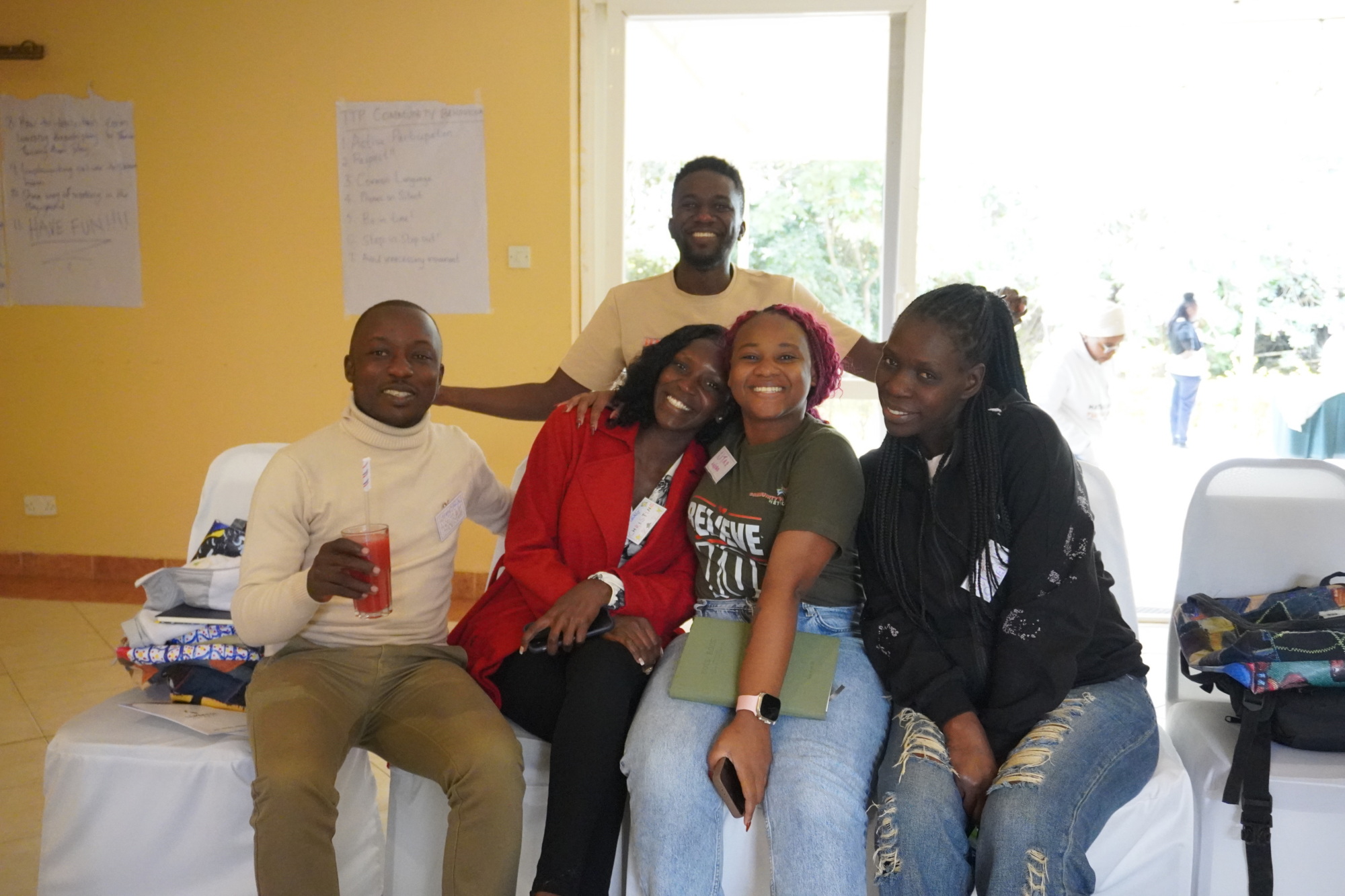
In 2025, GFC launched Thriving Through Play (TTP), a three-year initiative supported by the Lego Foundation, partnering with 20 community-based organizations in Kenya and Uganda to strengthen the mental health and psychosocial wellbeing of children in refugee and host communities.
Grounded in the belief that play is a powerful pathway to healing, TTP supports children aged 6-12 to build emotional resilience, confidence, and social connection. GFC’s partners in the TTP initiative use culturally-grounded, play-based approaches – including art, dance, sports, games, and storytelling – to create safe spaces where children can express themselves, develop coping skills, and receive consistent mentorship alongside their caregivers.
Supporting Early Education and Development
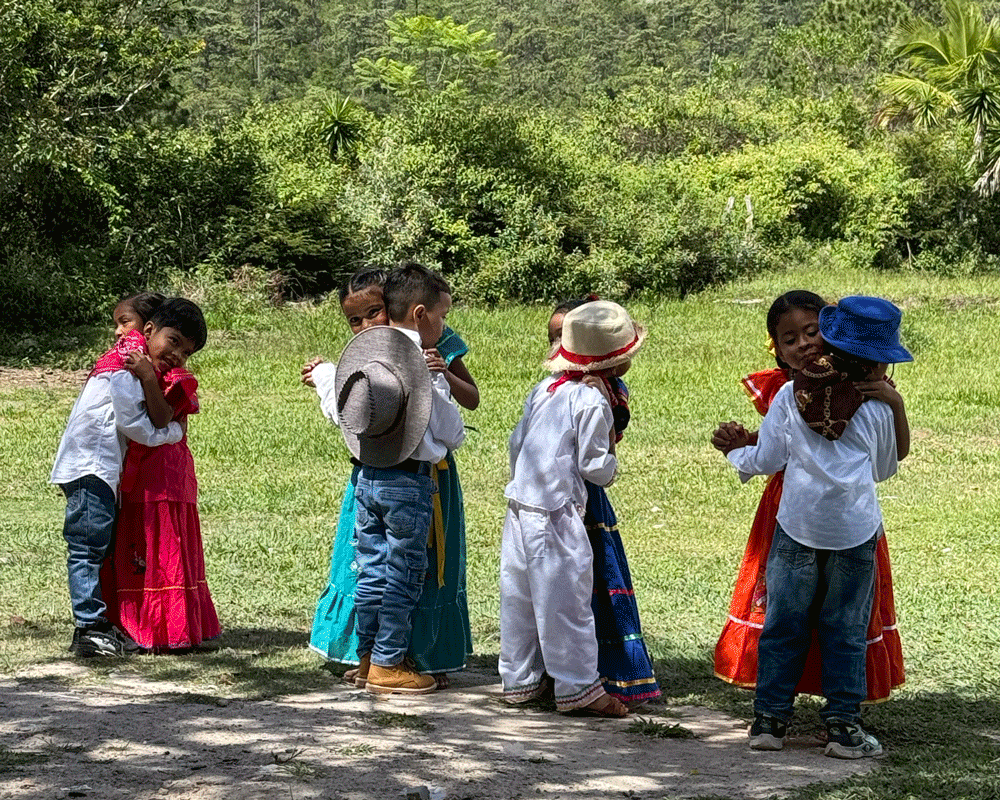
Honduras is a resource-rich country with strong community networks, cultural knowledge, and a deep commitment to children’s wellbeing. At the same time, the country continues to navigate a long history of interconnected systemic challenges that land hardest on the country’s young people, especially the children under the age of eight at the heart of our partners’ work in Honduras.
It is within this context that the Supporting Early Education and Development (SEED) initiative was created to expand access to inclusive early learning. The SEED initiative works with community-based organizations in Honduras to reach children who face the greatest barriers to early education – including children with learning disabilities, developmental delays, and other additional support needs – so they can access and thrive in inclusive, nurturing learning environments.
With support from the Evelyn S. and K.E. Barrett Foundation and Two Lilies Fund alongside early funding from the Bainum Family Foundation, SEED provides flexible funding and hands-on support to organizations working directly with children, families, and educators. This enables partners to strengthen early learning programs, train teachers and caregivers, and adapt learning approaches so children with different abilities can participate fully and confidently in their classrooms and communities.
In his blog “Hope, joy, and complexity in Honduras,” John Hecklinger reflects on a recent visit that revealed both the deep challenges facing children and the powerful community-led solutions rising to meet them. Through vivid moments with GFC’s partners, he captures the warmth, resilience, and determination shaping everyday life in the country.
Spark Fund: Youth-Led Climate Action in Southeast Asia initiative
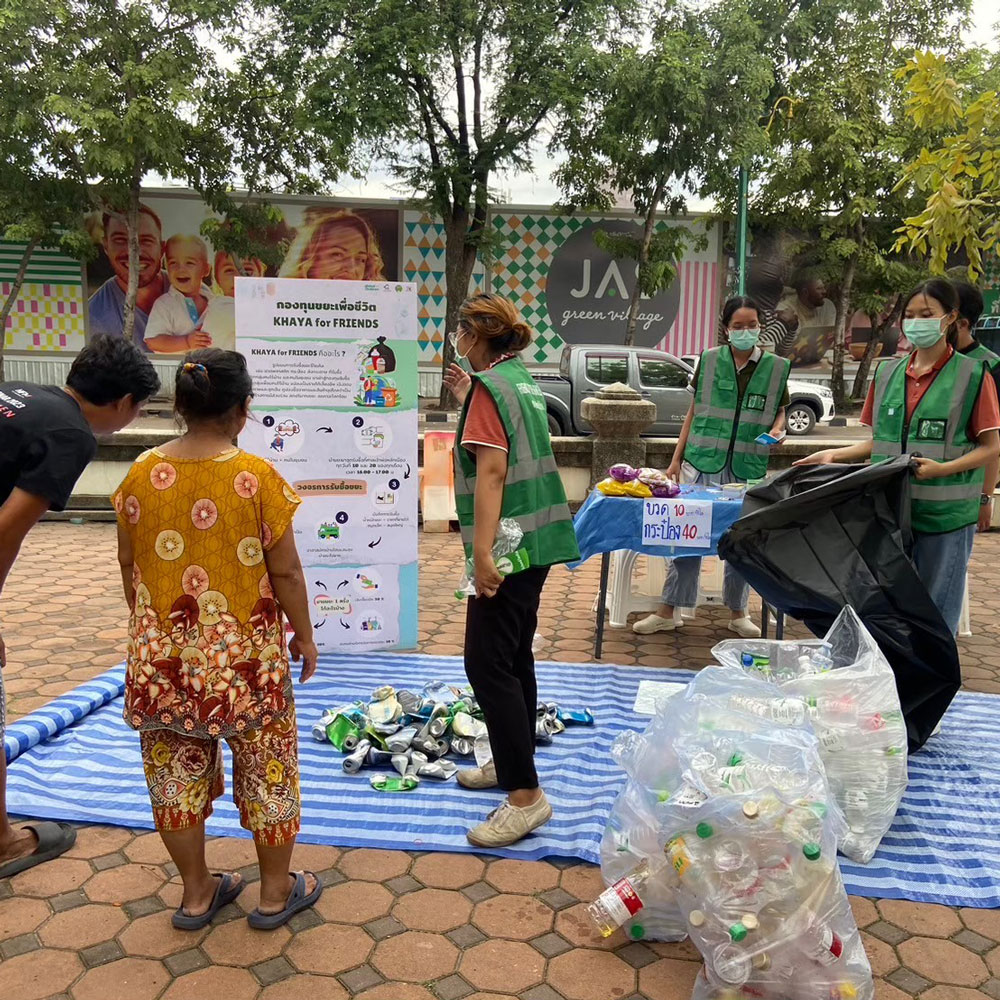
In Thailand and Vietnam, GFC’s Spark Fund supports youth-led climate action by placing young people at the heart of grantmaking and community-driven solutions. Through this participatory funding model, young leaders identify, select, and invest in youth-led and youth-focused organizations that are driving community-rooted responses to the climate crisis and strengthening peer learning across the region.
Supported by the Avery Dennison Foundation, Porticus, Lien AID, RS Group, and Garawake, this initiative empowers young leaders to design and implement climate solutions that respond to local realities, while developing skills in leadership, advocacy, and organizational management. This approach recognizes young people not only as climate advocates, but as capable decision-makers and system shapers.
Check out this new report “Sparking Change: Shifting Power and Resources to Youth” to see how youth‑led climate action is redefining philanthropy. The report highlights how young leaders in Southeast Asia are directing funding, influencing policy, and building lasting networks through participatory grantmaking. It shows why shifting power and flexible resources to youth isn’t just more equitable – it leads to more innovative, resilient solutions.
A Global Approach to Healthy Masculinities
At Global Fund for Children, we champion girls’ rights while also promoting forms of masculinity rooted in empathy, care, and respect. Harmful gender norms don’t only limit the potential of girls and young women, they also prevent boys and men from fully embracing their strengths and identities. Gender justice is critical for every child to feel safe, valued, and confident in their potential to thrive.
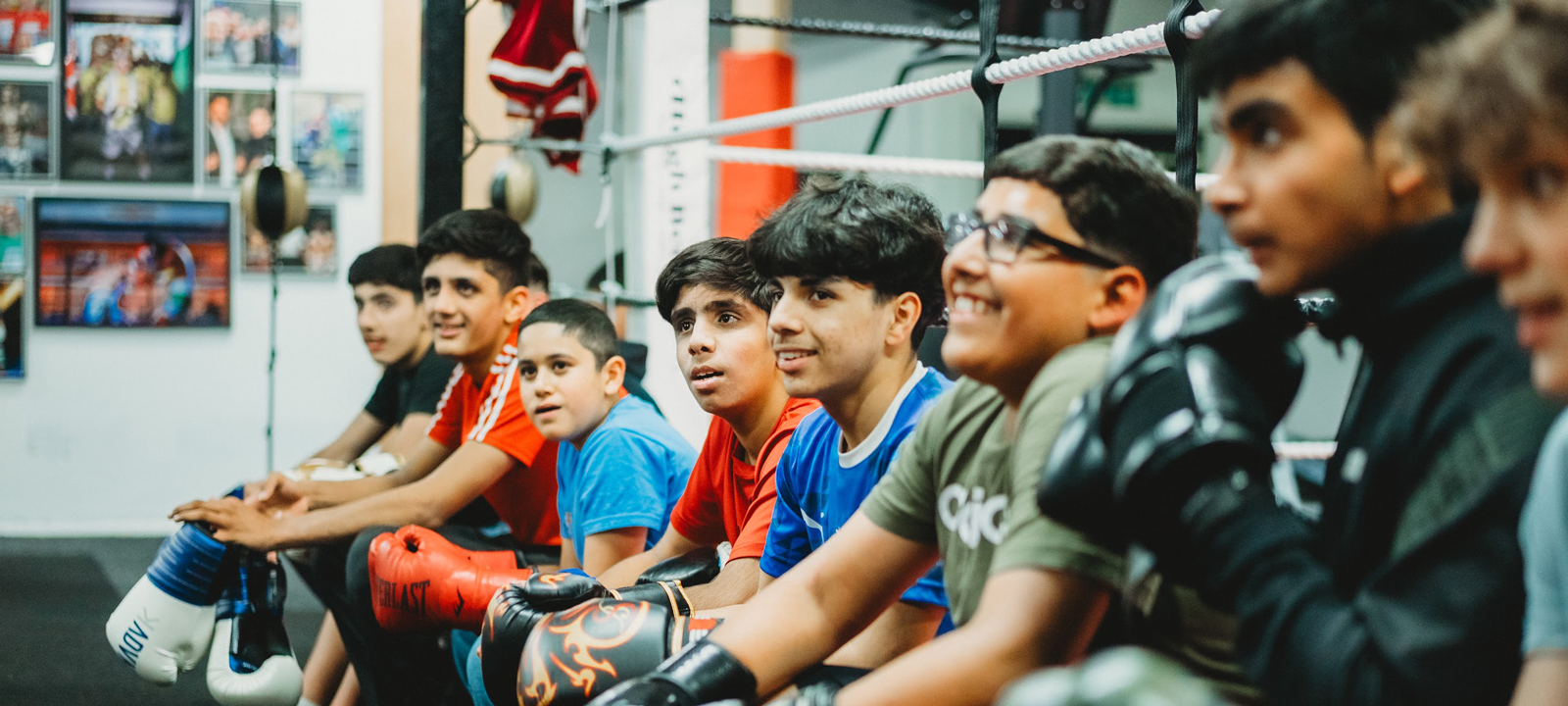
GFC leads the sector in supporting community-based organizations that design and implement healthy masculinities programming. GFC’s partners in the Americas and the UK have been advancing and learning from this approach for years, while partners in India and West Africa are exploring the most effective ways to engage boys and young men – all grounded in local leadership, cultural context, and lived experience.
Boys Beyond Bias
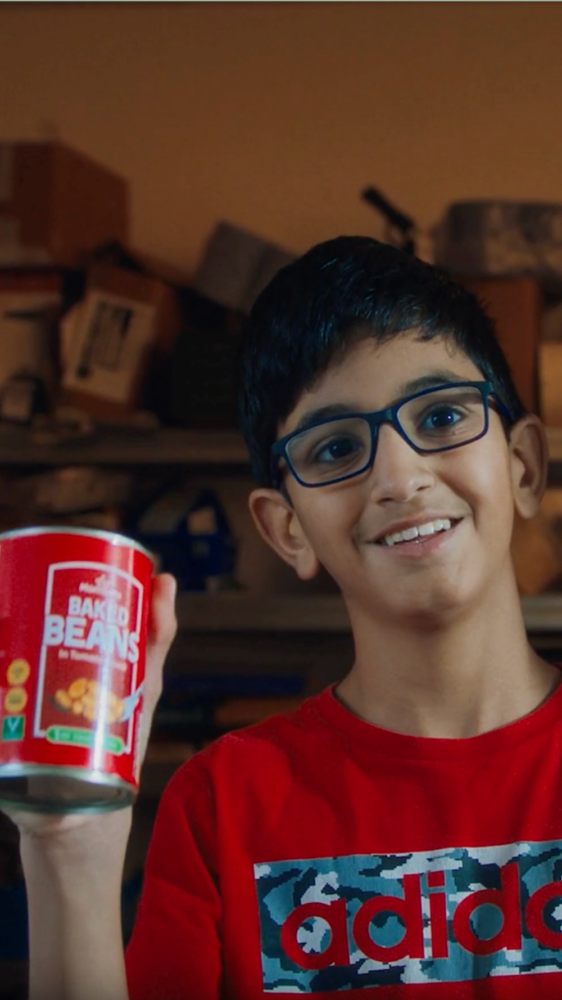
A major highlight in 2025 was the launch of #BoysBeyondBias, a digital storytelling campaign developed in collaboration with UK partners and co-created with the boys themselves, supported by Supported by The National Lottery Community Fund and the Department for Culture, Media and Sport (DCMS) through the #iwill Fund and Postcode Lottery.
Promoting Youth Leadership for Gender Justice
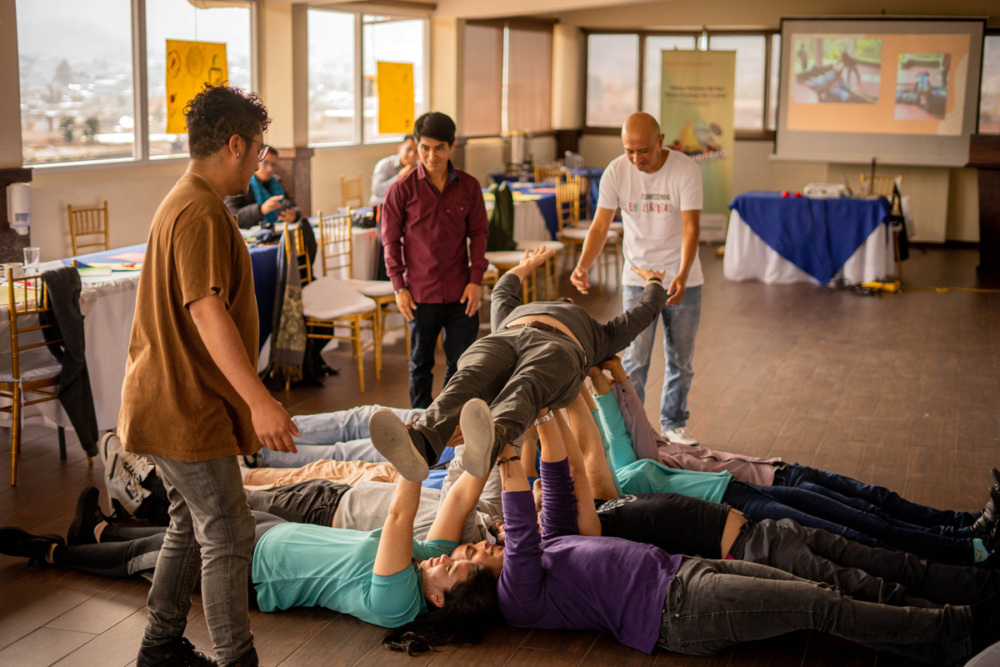
Alongside this work, partners in GFC’s Promoting Youth Leadership for Gender Justice (HEEL) Initiative in Latin and Central America addressed an urgent question: how can individuals and organizations actively engage boys and young men in the struggle for gender justice? In response, we co-created a Healthy Masculinities Toolkit – a practical, child-and youth-centered resource grounded in playful and participatory methodologies.
The toolkit offers accessible entry points for conversations around gender, care, identity, and respect, centering young people’s voices.
Looking ahead, GFC will deepen cross-regional learning and advocacy to advance gender justice through healthy masculinities, ensuring that boys and young men have the skills, confidence, and support to grow into community leaders.
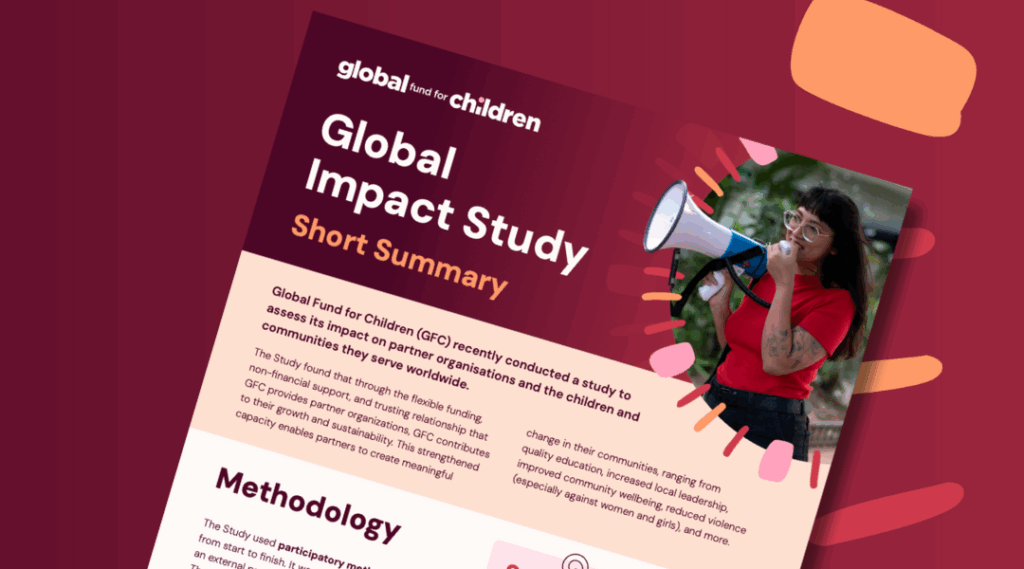
Influencing the sector through evidence and learning: our Global Impact Study
Understanding GFC’s impact
With funding from a MacKenzie Scott donation in 2022, GFC initiated a Global Impact Study to assess the effects of our funding and partnership model on community-based organizations and the children and communities they serve. The study engaged 49 partner organizations across 27 countries.
The findings demonstrated that GFC’s flexible funding, non-financial support, and trust-based relationships contribute meaningfully to organizational growth, sustainability, and community impact.
An inclusive, participatory approach to data collection was central to the study’s methodology, reflecting GFC’s commitment to trust-based practice.
Using a Peer Participatory Action Research (PPAR) model, 31 partner representatives from organizations in Guatemala, India, Kenya, and the UK were trained as co-researchers alongside our research partner, ECORYS. These co-researchers led interviews and creative research activities with fellow partners in their countries, complemented by online research methods.
Going forward, GFC will continue strengthening this peer-led approach as a more ethical, effective, and relationship-centered model for impact assessment – with the aim of influencing learning and evaluation practices across philanthropy.
GIS report findings
By strengthening partner organizations through flexible funding, trust-based relationships, and long-term support, GFC helped drive meaningful change across the communities they serve.
GFC's impact on communities
- Improved access to and retention in quality education (62% of partners)
- Shifts in harmful social norms, including attitudes around child marriage and gender equity (50%)
- Community-led action addressing systemic challenges (50%)
- Improved life opportunities and career pathways, particularly for young people (88%)
- Increased confidence, self-belief, and wellbeing, especially among youth (75%)
- Greater awareness of rights and key social issues (54%)
Impacts of GFC's funding approach
- Flexible, unrestricted funding enables impact: 46 of 49 partners reported greater ability to respond to community needs, strengthen systems, expand services, and sustain programming — including during crises.
- Trust-based partnerships drive innovation and wellbeing: All partners described feeling trusted and supported by GFC, allowing them to remain mission-driven, take thoughtful risks, and build healthier, more motivated teams.
- Long-term funding builds sustainability: Multi-year and higher-level funding had the strongest effect on organizational confidence, infrastructure, and the durability of community-led solutions.
Extending impact through shared infrastructure: Our hosted initiatives
GFC’s impact extends beyond the partners we directly fund by strengthening the wider sector and supporting peer initiatives to thrive. We host two independent entities within our fiscal and administrative framework, while they maintain their own leadership, identity, and mission. These initiatives extend the reach of GFC’s philanthropic model – centering community-led solutions, participatory approaches, and equitable resourcing. At the same time, our hosting enables these organizations to focus on driving impact, fostering community-led solutions, and scaling their programs effectively.
GFC’s hosting approach shows what is possible when strong governance, shared infrastructure, and trust in community leadership come together – creating the conditions for initiatives to thrive, adapt, and deliver meaningful impact at a time when the philanthropic system must be more responsive, collaborative, and people-centered than ever.
Learn more about our hosted initiatives below:
Funder Safeguarding Collaborative
Hosted by GFC since 2021, Funder Safeguarding Collaborative (FSC) is a network dedicated to improving safeguarding practices across philanthropy. FSC connects foundations and grant-makers to share learning, strengthen policies, and access expert guidance, helping organizations prevent harm and protect the communities they serve.
Key highlights include:
FSC launched a research project with Accountable Now to gather evidence on how funders can support effective safeguarding through their grant making. The research draws on insights from funders, grantee partners and sector experts to help us build a robust evidence base to inform the co-creation of evidence-based practice standards for funders. The results of the research will be published in early 2026.
FSC published a landscape analysis on the state of safeguarding in Asia. The analysis provides an overview of the current legal and regulatory framework, identifies key stakeholders, and explores FSC’s role in supporting and strengthening safeguarding efforts within the philanthropic ecosystem.
FSC facilitated a Community of Practice of safeguarding professionals to develop a Resource Guide, which offers practical steps to strengthen safeguarding, with a focus on the distinctive factors that influence the risk of harm and shape safeguarding practice in Bangladesh, India and Pakistan.
Together the findings of the landscape analysis and the Resource Guide will facilitate FSC’s collective efforts to improve safeguarding practices across the sector.
Read the Safeguarding in Asia analysis
Read the Safeguarding in South Asian Contexts Resource Guide
FSC’s global network of members continued to grow and we welcomed our 100th member, The David and Lucile Packard Foundation. Together our members are helping to transform the role of funders in promoting and supporting safe organizational cultures and practices.
FSC’s network of members benefit from contextually relevant information, knowledge, spaces and support services tailored to the needs of funder organizations and grounded in research and evidence.
The Iris Project
The Iris Project is an organization that invests in young people driving environmental action. Focused primarily in the Global South, they identify, fund, and amplify youth-led initiatives tackling the planet’s most urgent challenges, from protecting biodiversity to reducing waste and regenerating ecosystems. Through their flagship programme, The Iris Prize, they provide flexible funding, mentorship, and networks so young leaders can scale their impact and inspire change.
Key highlights include:
In 2025, The Iris Prize saw extraordinary global demand. Over 5,000 people completed the eligibility quiz, leading to 1,552 full applications from 111 countries – with 70% meeting the criteria. The Iris Project funded 9 projects this year, bringing the total supported since 2022 to 28.
The Iris Prize is often a first step into formal funding. 90% of winners told The Iris Project it was their first-ever external grant. All winners are still active in their projects 24 months on, and 100% have gone on to receive multi-year support from The Iris Project.
Environmental wins backed by The Iris Prize are already visible on the ground: Project Mila has diverted 40+ tonnes of organic waste from landfill through circular systems; in Bolivia, Uru Uru Team has helped bring Andean flamingo back to restored wetlands; and in Sierra Leone, Bangs Circular has established 300+ beehives, contributing to an 80% increase in bee populations – around 2 million more bees in the community.
Our Commitment to Safeguarding
GFC is not only a funder, but a sector leader committed to transforming philanthropy to be more equitable, and more accountable – trailblazing best practice in safeguarding both through our own work and through our leadership of initiatives such as the Funder Safeguarding Collaborative (FSC).
In the last year, we launched our new Global Safeguarding Policy, setting out a strengthened and more context-responsive approach to keeping children, young people, and communities safe. The policy affirms GFC’s commitment to working with partners through locally grounded concepts of care, wellbeing, protection, and safety, while recognizing that safeguarding must be shaped by culture, context, and community realities in order to be meaningful and effective.
The policy also introduced two important commitments to partners. First, we acknowledge the power GFC holds as a funder and commit to accountability, openness, and actively listening to partner feedback on how safeguarding is practiced.
Second, rather than withdrawing support when serious safeguarding incidents occur – a response that can unintentionally destabilize organizations and the communities they serve – we commit to working alongside partners through difficult moments to protect people, address harm, and strengthen systems together.
To ensure accessibility and equity, the Global Safeguarding Policy was launched in eight languages – Bengali, Brazilian Portuguese, English, French, Hindi, Spanish, Thai, Ukrainian with a shorter version produced in Vietnamese.
These languages were selected by GFC’s programs team to reflect the needs of partners and staff and to support language justice across the organization’s global network. While safeguarding policies are often shared only in English, this multilingual rollout reflects GFC’s commitment to equity in practice, ensuring partners and staff can engage fully with safeguarding expectations in the languages they use every day.
Our Donors
Thank you for standing with children and youth and for believing in a better future for them.
We are immensely grateful for all contributions, large and small. These lists include donors at the $1,000 level and above.
- Anonymous (1)
- Benzuly-Schaffzin Family Fund
- The Brimstone Fund
- The W. Robert Cotton Fund
- Flora Family Foundation
- E.H. Gimon Charitable Fund
- Girls Rights Project
- Goyal Foundation
- The Grace Jones Richardson Trust
- Harrington Family Foundation
- Hawk Rock Foundation
- Help Is Passed on Fund
- John and Julia Hinshaw Charitable Fund
- Hurlbut Johnson Charitable Trusts
- Hutton Family Foundation
- The Jain Foundation Fund
- Kenyon Family Foundation Trust
- The Donald & Iris Kim Foundation
- Lade Family Charitable Fund
- The Manifold Fund
- Marc Haas Foundation
- Michael Marsh Annual Giving Fund
- Pichai Family Foundation
- Sanghera Foundation
- Sheridan Foundation Ltd
- Garawake
- Anonymous (8)
- Marine Abiad
- Benny Adler
- Maya Ajmera & David H. Hollander Jr.
- Esther & Michel Antakly
- Amit Bhalla
- Flora Birdzell
- Bernadette Black
- David Blumenstein
- Diane Boogaard
- Joshua D. Brown
- James M. Cain Esq.
- Julia & Kevin Callaghan
- Stephanie & Antoine de Guillenchmidt
- Judith Diers
- Maulik & Priya Doshi
- Alessandro Dusi
- Manal Eldumiati
- Kristen Klemperer Fenster
- Loic Fery
- Jeanne Donovan Fisher
- Martha Okie & Anthony Fouracre
- Ty Fujimura
- Ian Glasner
- Johannes Groeller
- Emmanuel Gueroult
- Priya Gupta
- Susan Gutchess
- Gail Ewing Hall
- James Harrison
- Lisa and Lance West
- Caroline & Mark J. Wilson
- John Hecklinger
- Richard Hecklinger
- John and Holly Hemphill
- Erdit Hoxha
- Jennifer A Hunt
- Chris and Jeannie Kmetz
- Michael Kolotylo
- Jennifer Lee
- Spencer Rogers and Karen Leu
- Tamara & Scott Levenson
- John Phillip Lipsky
- Joan Lombardi
- Alka and Prakash Lothe
- Teresa Luchsinger
- Marine Mallinson
- Kenneth Mantey
- Xavier Mayer
- Debbie McGoldrick
- Maryline Mertz
- Stacey H. Mitchell
- Kiran Moorthy
- Eric Murciano
- Margot Perot
- Cecile Reed
- Derek Robinson
- Lila and Andrew Rymer
- Marc Friedman and Gina Schaefer
- Gabriel Schwartz
- Miriam E. Sexton
- Anne Spar
- Pamela Wall
- Gregory Wallig
- Maryam Wasim
- Jenny Zhen
- Anonymous (2)
- Applovin
- Indus Charitable Foundation
- Ivy House
- Tea Collection
- Tennis Australia
- US Cellular
- Wool&Prince
- Anonymous (1)
- Advancing Girls Fund, a fund of Tides Foundation
- Avery Dennison Foundation
- Bainum Family Foundation
- The Children’s Investment Fund Foundation
- Comic Relief USA
- Co-Op Foundation
- David & Lucile Packard Foundation
- Dorothea Haus Ross Foundation
- The Evelyn S. and K.E. Barrett Foundation
- Focus Central America
- Fondation CHANEL
- Give Lively Foundation Inc.
- GlobalGiving US
- Imaginable Futures
- Laudes Foundation
- The LEGO Foundation
- Lesley Family Foundation
- National Lottery Community Fund
- Oak Foundation
- Postcode Lottery
- Porticus
- Pathy Family Foundation
- The Schooner Foundation
- Stichting Benevolentia
- The Summit Foundation
- Tinker Foundation
- Trone Family Charitable Fund
- Two Lilies Fund
- Vibrant Village Foundation
- Ward Foundation
- Women Win
- Youth Endowment Fund
- Lemongrass Consulting
- Lincoln Electric Employee Giving
- Microsoft Matching Gifts Program
- Akin Gump Strauss Hauer & Feld LLP
- Eversheds Sutherland LLP
We are deeply grateful to those who have generously chosen to include GFC in their estate planning, leaving a lasting legacy that will continue to support children, young people, and communities for generations to come.
- Maya Ajmera & David H. Hollander Jr.
- Antonella Antonini & Alan Stein
- Colleen Brinkmann
- Warren L. Kessler
- Iara Lee
- John Presley
- Adele Richardson Ray
Our Leadership
- Swatee Deepak – Co-Chair
London, United Kingdom - Greg Wallig – Co-Chair
Theia Analytics Group
Washington, DC - Lila Rymer – Treasurer
Marsh
New York, NY - James M. Cain
Eversheds Sutherland
Washington, DC - Antoine de Guillenchmidt
Rothschild & Co
London, United Kingdom - Judy Diers
Senior Advisor
New York, NY - Maulik Doshi
Steward Redqueen
Washington, DC - Ian Glasner
HSBC
London, United Kingdom - Richa Gupta
Labhya
Delhi, India - John Hecklinger
Global Fund for Children
Washington, DC - Nicole Kamaleson
Global Social Impact
St Thomas, US Virgin Islands - Joan Lombardi
Early Opportunities LLC
Washington, DC - Stacey H. Mitchell
Akin Gump Strauss Hauer & Feld LLP
Washington, DC - Willice Onyango
The Youth Café
Nairobi, Kenya - Hayley Roffey
Global Fund for Children
London, United Kingdom - Milena Rusu
Feminismd
GFC’s Youth Leadership Council
Chisinau, Moldova - Marijana Savic
NGO Atina
Belgrade, Serbia - Mark Wilson
Goldman Sachs & Company
London, United Kingdom
- Mark Wilson – Chair
Goldman Sachs & Company - Antoine de Guillenchmidt – Treasurer
Rothschild & Co - Marine Abiad
Goldman Sachs & Company - Michel Antakly
PJT Partners - John Hecklinger
Global Fund for Children - Carol Liew
ECCA Family Foundation - Kiran Moorthy
Consello Group - Sonal Sachdev Patel
GMSP Foundation - Hayley Roffey
Global Fund for Children - Muna Wehbe
Strategic Advisor
GFC’s Partner Advisory Group is a collaborative forum where trusted partners share expertise and perspectives to inform each organization’s strategy, innovation, and continuous improvement.
- Bishnu Hari Bhatta
Director
Partnership for Sustainable Development
Nepal - Tatiana Costev-Cosuleanu
Executive Director
Institute for Rural Initiatives
Moldova - Amanda Hall
Development & Partnerships Coordinator
Organization for Youth Empowerment
Honduras - Emmy Zoomlamai Okello
Founder & Executive Director
Foundation for Inclusive Community Help
Uganda - Kolawole Olatosimi
National Coordinator & Senior Program Officer
Child & Youth Protection Foundation
Nigeria - Jesús Villalobos
General Director
Utopia
Mexico - Sara Kekuš
Director
Center for Peace Studies
Croatia - Camelia Proca
Director
Asociația pentru Libertate și Egalitate de Gen
Romania - Luz Bonilla
Director
Niñas de Luz
Colombia - Mustapha Keita
Program Manager
CASE SALONE
Sierra Leone - Irma González
Executive Director
Center for Integrated Care for Women
Mexico - Hira Naz Awan
Program Director
Chanan Development Association
Pakistan
- Milena Rusu,
Chair
Moldova - Nojus Saad,
Vice Chair
Iraq - Adibeli Chidinma,
Nigeria - Ayuba Huudu,
Ghana - Stephani Paliza,
Peru - Maria Veronica O. Papa,
Phillipines - Paloma J. Paul,
Chile - Rostyslav Semka,
Ukraine
Our Financials
Statement of Financial Position
as of June 30, 2025
Statement of Financial Position
as of June 30, 2024
Statement of Activities
as of June 30, 2025
Statement of Activities
as of June 30, 2024
Funder Safeguarding Collaborative Statement of Activities
For the year ended June 30, 2025 and June 30, 2024
Contact Us
Global Fund for Children
1411 K Street, NW, Suite 1200
Washington, DC 20005
United States
Global Fund for Children UK Trust
Work.Life, 4 Crown Place
London EC2A 4BT
United Kingdom
Want to learn more about our work?
Explore the menu at the top of this page or visit www.globalfundforchildren.org.
Follow us on social media: Instagram | LinkedIn | Facebook
Scroll through the carousel below to meet some of the children and young people we support around the world. Your generosity makes their growth, learning, and dreams possible — thank you for being part of their journey.