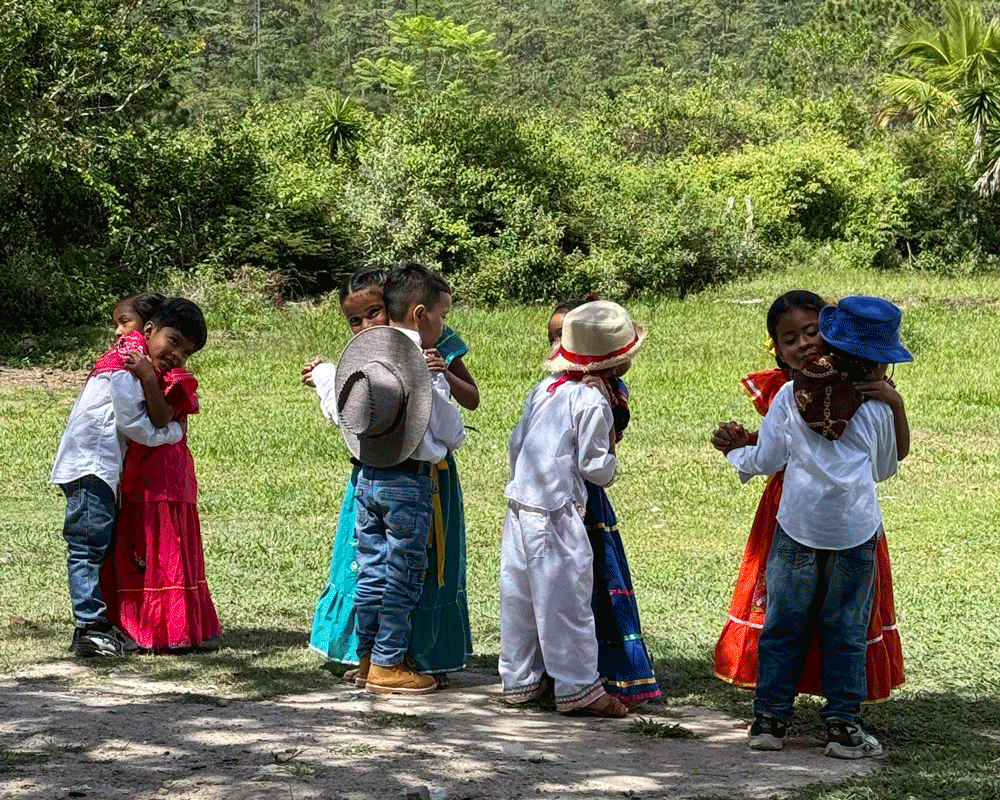
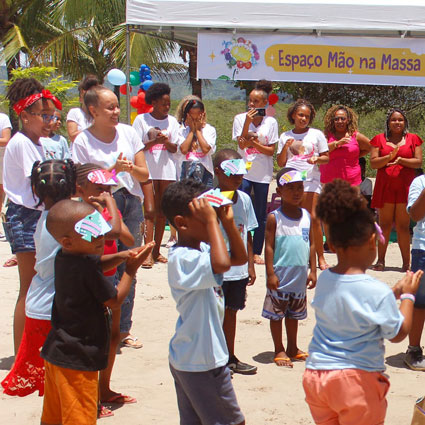
I’m returning inspired and energized from a convening of Global Fund for Children partners from our Supporting Early Education and Development (SEED) initiative in Tegucigalpa, Honduras, including site visits with two of our partners, Casa ASTI and Educación Diaria.
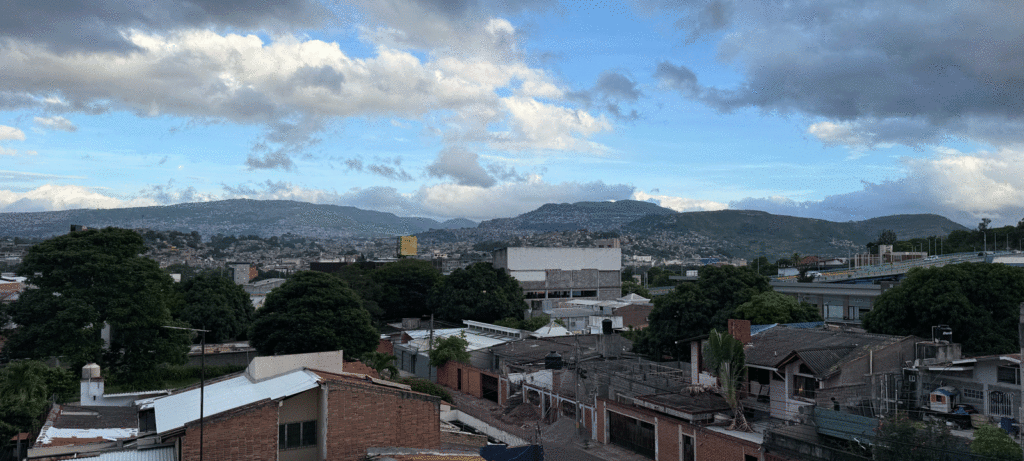
My colleague, Mea, and I had the warmest of welcomes to Tegucigalpa, with dinner at our colleague Kim’s family home. Walking the neighborhood with Kim’s father-in-law felt like strolling through a small village with warm greetings, rich smells of good things cooking, beautiful views, and kids playing soccer surrounded by lush, green, hills. In a hilarious exchange, a friend of Kim’s father-in-law came up and asked in a very friendly way: “Hey, what’s with the gringos?”
Two days later, after two site visits and a morning of intense convening with more than 100 people working to improve the state of early childhood development in Honduras, I admit to a few hours of feeling overwhelmed by the scale of challenges I was coming to understand. I have spent significant time in the region, and understood Honduras’ challenges in an abstract way, but in conversation with civil society leaders, I heard personal articulations of the true scale and complexity of the challenges our partners face with courage and tenacity. It was moving and overwhelming, but ultimately hopeful.
Honduras is a beautiful, resource-rich country caught in interconnected challenges accumulated over time. The 2009 coup sparked deep political polarization, a weak judicial system supports a culture of impunity, extortion throttles small business, and corruption diverts funds from essential services to the pockets of the elite. Since the 1800s the United States has had an outsized and problematic influence on Honduras’ development. From the immense power of multinational fruit companies, to the use of Honduras to stage Cold War interventions, to legitimizing the 2009 coup, to the protagonism and then withdrawal of USAID, the United States has been a consistently powerful influence, often disrupting local dynamics towards positive change.
These interconnected challenges land hardest on the country’s young people, especially the children under the age of eight at the heart of our partners’ work in Honduras. More than half of Hondurans are younger than 25 and 28% are younger than 14. One in three children under the age of five suffer from chronic malnutrition, and only 58% between the ages of three and five benefit from any pre-basic education.
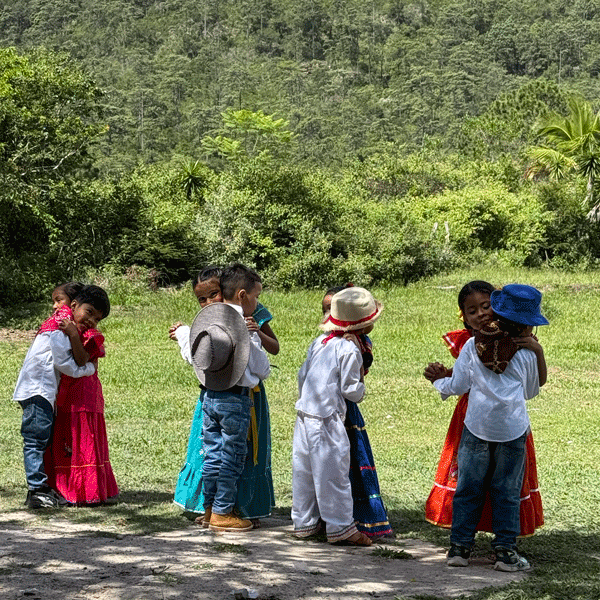
I saw powerful community responses to these challenges firsthand on my visits to Educación Diaria in Ojojona and Casa ASTI in Tegucigalpa. The overstretched education system struggles, employment opportunities are limited, and gang extortion and violence is endemic. I saw one of our partners run out of food at lunch and spoke with the doctor attending to 250 children with little compensation and very few supplies. Adolescent girls arrived with their babies to be in a safe place, and maybe to have a meal with friends.
Gaining a better understanding of all of this tempted me to imagine a neat formula of interventions to solve these problems. After all, Honduras is not an enormous country, so isn’t there some big, dramatic thing that could be done? One could imagine strengthening democratic institutions, fighting corruption, restoring the legal system, investing in education and health infrastructure, and tackling gang violence as key areas of big investment and change.
But even if the Honduran government had the stability and the will to take these on, the resources are not available at that scale locally and yet another round of foreign intervention in Hondurans’ affairs seems more likely to perpetuate existing realities than to effectively spark real change.
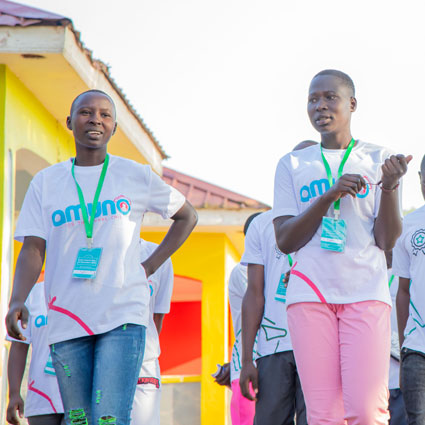
This complex mix of systemic challenges would resist any top-down “big bet” or basket of big bets. The Honduran reality demands a different way of thinking and that is what I experienced in just a few days among our partners. These partners are absolutely meeting critical needs of young people under the age of eight, but that’s just their starting point. The first thing I saw when we arrived at Casa ASTI was a group of mothers learning how to improve nutrition for their children. These young mothers and their children work in the chaotic market area in central Tegucigalpa, and often they live on the streets. I also met members of an adolescent youth club –self-organized but supported by Casa ASTI – who are volunteers helping with the younger children. I learned how Casa ASTI shares resources and expertise with other organizations in the SEED cohort.
One poignant example was a young girl participating in the program of the other organization I visited, Educación Diaria in Ojojona outside of Tegucigalpa. Having learned of the girl’s abuse by a family member, Educación Diaria called on Casa ASTI for the mental health resources – just one of many instances of collaboration among organizations in the SEED initiative.
Casa ASTI and Educación Diaria did not know each other before GFC brought them together along with Centro de Niños con Necesidades Educativas Especiales (CNNEE), Fundación Centro Cultural Infantil, Un Mundo, and United Way Honduras.
This is why the work of our local partners is so critical and how GFC’s role has been so meaningful to them. Although each of these partners center children under eight in their programs, they all work holistically, recognizing that each child is part of a web of relationships that must work to support the wellbeing of that child. Their programs have evolved significantly because of the connectivity with others that GFC provides, sparking trustful, caring, and generous relationships among community leaders who have now become true friends. These partners realize that working collaboratively has great advantages. Tangible resources like food, school supplies, paint, furniture, and professional counseling services are valuable and great to share, but even more valuable is the learning, the mutual encouragement, the solidarity, and the camaraderie that helps them innovate and persevere.
They recognize that government is not in a position to solve these problems, but they see how policy frameworks help them prompt the government at the municipal, district, and federal levels to do better. Un Mundo has worked effectively with the municipal government in La Ceiba, and Casa ASTI has received governmental support, albeit inflexible and inconsistent. People within government entities are asking to be held accountable – it helps them make the case – even as others within government entities may not be supportive. Government is not monolithic – it is also complex, with its own tangled web of competing priorities and intentions. Civil society plays a critical role in informing, educating, shining a light on uncomfortable realities, and highlighting where things are working.
These partners do not see their organizations as having all the answers, rather, they recognize themselves as parts of an ecosystem which can generate a million different answers over time. Our role is not to intervene or fix but to convene, support, accompany, offer perspective and connections and develop trust. Our goal is to be accepted into the change process as an ally, not as a solution provider.
There is no easy fix for Honduras. The challenges are deep-seated and systemic. But in the dedicated work of local people creating change in their own communities, there is incredible hope, warmth, and joy. The smartest bet we can make is not on a single, grand solution, but on the process of experimentation and discovery itself.
By funding and connecting this ecosystem of local leaders, we are investing in the million different discoveries and solutions that will, over time, untangle the knot and build a more just and prosperous future with and for the next generation of Hondurans.