The architects of real change: why youth and community-led organizations must lead the fight to end violence against children
By Global Fund for Children
This is the first in a series of blogs leading up to the Second Ministerial Conference to End Violence Against Children in November 2026 in the Philippines, and builds on Global Fund for Children (GFC)’s engagement during the First Conference in Bogotá in 2024. It reflects on what has and has not changed since the First Ministerial Conference, drawing on the voices and experiences of some of GFC’s partners in Colombia, India, and Nigeria. Their insights highlight how global commitments translate or not into meaningful change in the lives of children, particularly in efforts to address violence against children (VAC) and its intersection with gender-based violence (GBV).
For over 30 years, Global Fund for Children (GFC) has worked alongside community-based and youth-led organizations across education, gender justice, safety & wellbeing – including violence against children (VAC) – climate resilience, youth power, and solidarity in emergencies . Through long-term accompaniment and flexible support, GFC has worked with partners responding to realities in their communities, including efforts to address VAC and its intersection with gender. This experience reinforces a consistent lesson: these organizations are already designing and delivering effective, locally grounded solutions, even when their leadership is not fully recognized or supported by traditional systems.
Violence against children1 remains a pervasive global crisis. More than 520 million children (over one in five) are living in or fleeing conflict zones (Save the Children, 2026). The United Nations has recorded over 41,000 grave violations against children2 – namely killing and maiming; recruitment or use of children; sexual violence; abduction; attacks on schools or hospitals; and denial of humanitarian access – a 25% increase in recent years (United Nations, 2025; Frazier, 2026). UNICEF estimates that around 1 in 5 girls and women globally have experienced sexual violence in childhood, including both contact and non-contact forms such as online abuse and harassment (UNICEF, 2024).
Around 610 million children live in households where mothers experience intimate partner violence, while approximately one in six adolescent girls have experienced intimate partner violence themselves (UNICEF, 2025). Climate shocks are deepening these risks, and evidence shows that girls in fragile and disaster-affected contexts face heightened risks of dropping out of school and gender-based violence during prolonged school closures (UNICEF, 2025).
These crises are deeply interconnected. Conflict, gender inequality, intersecting discrimination, digital harms and climate shocks reinforce one another, creating instability, fear, and trauma for children and young people. Violence against children persists in part because communities closest to these realities are often excluded from power, resources, and decision-making.
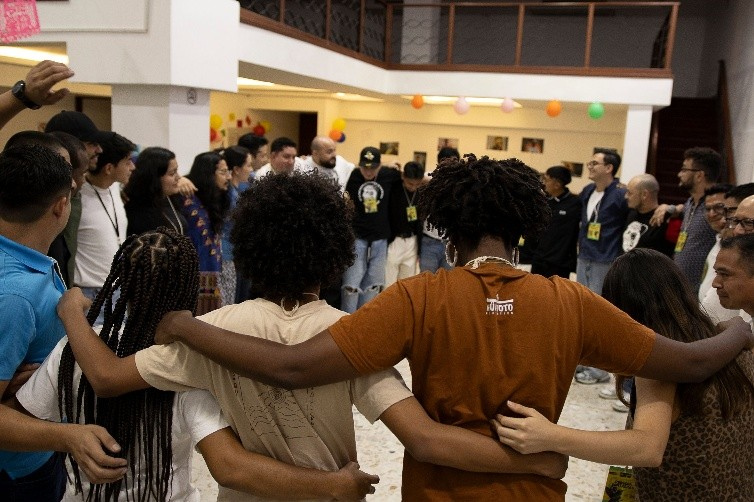
Given the scale of the issue and the importance of addressing violence against children (VAC) the first Global Ministerial Conference on Ending Violence Against Children was held in Bogotá, Colombia, in November 2024. It brought together approximately 1,400 delegates from 130 countries, including ministers, children, youth, civil society, and other stakeholders. The conference generated significant commitments, including 400 pledges by governments and partners to strengthen efforts to prevent and respond to VAC. However, despite these commitments, GFC partners continue to report limited progress in translating pledges into concrete action. Across many contexts, implementation remains off track, as reflected in the realities experienced by children and communities around the world (See GFC’s engagement during the First Conference here).
As the world approaches the Second Ministerial Conference in 2026 in the Philippines, GFC and its partners are clear: the challenge is no longer the lack of commitments, but ensuring meaningful change at all levels, especially for children and young people who are hardest to reach, and in contexts where policies and frameworks developed in global spaces do not yet translate into holistic, on-the-ground impact.
This requires a shift towards sustained, flexible funding for grassroots organisations, trust-based support for innovation, and the redistribution of power so that survivors and young people are recognised as decision-makers and technical partners. It also means elevating mental health as a core pillar of the response and rejecting any normalisation of children bearing the brunt of conflict amid global inaction.
What GFC partners are learning from the frontlines of violence against children and gender-based violence (GBV)
Violence against children is often described as a systems failure, but it is also an area where effective responses already exist. Across sectors and contexts, GFC partners consistently demonstrate that when systems are grounded in lived experience, prevention, protection, recovery and healing are not only possible, they are already being implemented in practice by community-based and youth-led organizations.
At the same time, key gaps remain in how systems recognize and act on children and young people’s wellbeing. GFC partners consistently highlight mental health as a central yet still under-prioritized dimension of addressing violence against children and its intersection with gender-based violence. Where it is integrated into responses, it becomes a foundation for recovery, resilience, and prevention.
Mental health is still not treated as a priority, even though it is one of the biggest challenges children and young people are facing today, including its intersection with GBV. In Colombia, girls and very young women are being forced to take contraceptives by their parents without consent, which is contributing to serious mental health impacts” – Luz Bonilla, GFC partner representative at the First Ministerial Conference in Bogotá and President of Fundación Niñas de Luz, Colombia3
In many contexts, systems that respond more effectively are those that move beyond seeing behavior as “misconduct” and instead understand it in context; often as a response to trauma, stress, or unmet needs. This shift is already being applied by community-based organizations, even if it is not yet consistently reflected in formal systems.
People see behavior, but they do not ask what is behind it. What is often labeled as misconduct is frequently a response to trauma.” — Shannon Massar, Faith Foundation, a GFC partner organization in India4.
Inclusive education practices also show what works when stigma is actively addressed. Children with disabilities thrive when schools are equipped with training, awareness, and support systems that recognize disability as part of human diversity rather than a limitation.
Without deliberate inclusion, schools risk becoming spaces of bullying, isolation, and silence reproducing the very inequalities they should challenge.” — Favour Ogbodum, Child and Youth Protection Foundation, a GFC partner organization in Nigeria5.
Teachers play a critical role in this ecosystem. They are often the first to identify risk and respond to trauma, but cannot do so effectively without training, resources, and institutional support. Inclusion also depends on awareness among students and communities, so that disability is understood as part of human diversity rather than something to stigmatize. Without this, exclusion becomes normalized even within systems intended to protect children.
GFC partners also point to a persistent gap around sexual and reproductive health and rights (SRHR). In many settings, stigma among parents, educators, and school leadership continues to limit or exclude these conversations, leaving children and young people without essential knowledge about consent, safety, and their bodies. This contributes to harmful relationships and reinforces gender norms that disproportionately affect girls, young women, and gender-diverse children and youth.
Schools have a responsibility to do better. Without confronting stigma around disability, mental health, and SRHR, education systems cannot fulfill their role in protecting children or creating enabling environments for them.
Favour Ogbodum, Child and Youth Protection Foundation, a GFC partner organisation in Nigeria.
A particularly affected group is adolescent mothers. Many are unable to return to school due to stigma, discriminatory policies, and limited re-entry support. Across many contexts, adolescent pregnancy remains a major driver of school exclusion, with millions of girls still out of education because systems are not designed to support continued learning after pregnancy (UNESCO, 2026).
However, there are also clear examples of progress thanks to young activists. In Sierra Leone, for instance, sustained advocacy by youth activists and civil society organisations contributed to policy reforms enabling pregnant girls and young mothers to return to school. This demonstrates how change is possible when community-led advocacy is recognised and translated into policy action (Amnesty, 2020).
Prevention works when it is sustained
GFC partners, who are frontline practitioners are clear: violence against children, including sexual violence, is preventable and many of these prevention approaches are already being implemented by community-based organizations in diverse contexts.
We have seen that prevention is possible. But it requires long-term investment, not short-term projects.” — Dr Manjeer Mukherjee, Arpan, a GFC partner organization in India6
Where prevention is effective, it is rarely a single intervention. It is a combination of safeguarding systems in schools, comprehensive sexuality education and personal safety education, early intervention, and community-based support. These approaches already exist in practice through the work of community-based and youth-led organizations, but they require time, trust, and sustained investment to be maintained, adapted, and expanded.
Recovery follows the same pattern. Healing is not immediate, and it is not linear. It requires long-term, community-based support systems that are already being delivered by local organizations responding directly to children and young people that are survivors of sexual abuse, and their caregivers:
Parents have a lot of questions. How do they support their children while dealing with their own emotions?” — Shannon Massar, Faith Foundation, a GFC partner organization in India
GFC provides this type of sustained support to its partners, and over the years has seen how organizations grow and evolve through it, moving from delivering community-based programs to influencing wider systems and policy:
When sustained support exists, the scale of change shifts. In GFC's work in India, long-term support to Arpan during its foundational years proved consequential. It helped build the organizational confidence and capacity to move beyond direct delivery. Over time, Arpan evolved from running school-level interventions to also working with government partners on policy and systems change, shaping how child sexual abuse prevention reaches children at scale.
Corey Oser, Senior Vice President of Programs at GFC
Across contexts, feminist and women-led organizations have long demonstrated what sustained, care-based responses look like in practice. Their work shows that violence is not isolated or inevitable, but rooted in structural inequalities and that when community-based responses are supported over time, they can transform outcomes for children and families.
However, these solutions require more than recognition. Community-based and youth-led organizations are already delivering them, often under constrained and short-term conditions. Sustained support is essential for them to continue this work over the long term, to innovate, and to scale approaches that are already making a difference in children’s lives. Without this, even the most effective solutions remain limited in reach and impact.
GFC is already helping to shift this reality by supporting partners through more flexible approaches to funding:
Grantmaking is a valid way to support organizations in mobilizing resources in a flexible and unrestricted way. Unrestricted resources are essential to enabling grassroots organizations to do their work effectively.
Katherine Zavala, GFC Deputy Vice President of Programs
Towards funding systems that better recognize and trust youth-led and community-based organizations
GFC partners believe that traditional funding systems often do not fully trust the capacity of community-based and youth-led organizations. As a result, funding tends to be short-term, highly restricted, and governed by rigid requirements that limit innovation and long-term impact:
We are expected to show impact quickly, but real change takes years. There are too many restrictions and not enough space to test new ideas.” — Chidinma Adibeli, member of GFC’s Youth Leadership Council and representative of MildHeart Care Foundation in Nigeria7
At the same time, many of these organizations continue to face significant barriers in accessing funding altogether. As GFC partners consistently note, this is not a reflection of inefficiency or lack of capacity on their side. Rather, it reflects a structural misalignment in how priorities are set and how resources are distributed across the sector.
We are forced to choose between carrying out our mission or spending time searching for resources. That leaves more children unprotected. Governments invest millions in wars and in space exploration, but they forget what’s essential: without protected children, there is no future to sustain.” — Luz Bonilla, GFC partner representative at the First Ministerial Conference in Bogotá and President of Fundación Niñas de Luz, Colombia
GFC sees this persistent tension: grassroots organizations are expected to deliver long-term social change within short-term funding cycles, and to innovate within highly constrained frameworks. This limits not only what they can do, but how far their impact can reach.
What is needed now is a shift from viewing these organizations as “recipients” of funding to recognizing them as essential actors in designing and delivering solutions, and ensuring that funding systems are built to reflect that reality.
What meaningful change actually requires
As the Second Ministerial Conference to End Violence Against Children approaches in November 2026, GFC believes the challenge is not a lack of commitments. The issue is the persistent failure to implement them in a holistic way that centers frontline child rights defenders, women-led organizations, community-based, and youth-led organizations.
Without meaningful and resourced follow-up, commitments risk becoming repetition, cycle after cycle of promises that do not translate into change for boys, girls, and young people, including LGTBIQA+ children and youth, because they are made in spaces that continue to exclude them from real decision-making:
In high-level forums such as Ministerial Conferences, advocacy and influencing are often concentrated globally, while implementation and follow-up remain underfunded and insufficiently supported. This creates a persistent gap between what is agreed and the resources required to deliver real change at the local level, and reach the children and youth furthest behind.
Corey Oser, Senior Vice President of Programs, Global Fund for Children
A different way forward
As GFC partners consistently show, community- and youth-led organizations are already delivering prevention, protection, healing, rehabilitation, system strengthening, and justice. In many cases, they are sustaining responses where formal systems fall short, despite operating with limited, uncertain, or short-term resources.
Take a risk on us. We are already doing the work. Imagine what could happen if we were fully supported.
Chidinma Adibeli, member of GFC’s Youth Leadership Council and representative of MildHeart Care Foundation in Nigeria.
The question is no longer whether these actors are essential—the evidence already confirms they are. New research from UNICEF, Purposeful, and GAGE highlights how girls’ organising contributes to change at individual, community, and societal levels, including shifts in norms, increased civic engagement, and policy influence. Yet it also shows that barriers to policy uptake and chronic underfunding continue to limit their impact at scale (UNICEF, Purposeful, and GAGE, 2026).
The real question is whether systems are willing to reorganise themselves to reflect this reality. Because the challenge in ending violence against children and gender-based violence is not only a lack of tools, knowledge, or frameworks, it is also how power, trust, and resources are distributed.
From commitments to accountability
GFC is deeply alarmed by the continued scale of violence against children and its intersection with GBV and by the persistent failure of systems to respond with the urgency, coherence, and ambition required. Despite repeated global commitments, progress remains uneven and too slow for the millions of boys, girls, young people, including LGBTQIA+ still affected across contexts of conflict, inequality, displacement, and climate crisis.
If the 2026 Ministerial Conference in the Philippines is to mean anything different, it must move beyond repetition and into concrete change in how systems are designed, funded, and governed.
For GFC and its partners, this means a clear shift from principles to action:
Fund grassroots organizations, including youth-led: Move from short-term, project-based funding to long-term, flexible, and unrestricted support that allows community- and youth-led organizations to sustain their work, respond to real needs, and invest in long-term impact rather than survival.
Fund innovation, not restriction: Replace rigid funding structures with trust-based approaches that allow organizations to test, adapt, and scale solutions grounded in lived experience.
Shift power to survivors and those most affected: Center the leadership of children and young people, including children with disabilities, girls and young women, LGBTQIA+ youth, and survivors of sexual violence, not as contributors to predefined agendas, but as decision-makers.
Recognise youth as technical partners: Move beyond participation towards leadership, with young people shaping agendas, moderating spaces, engaging media, and leading monitoring and evaluation.
Elevate mental health and gender-responsive approaches: Make psychosocial support a core, funded pillar across education, health, and protection systems, ensuring VAC interventions address the distinct needs of girls, boys, and youth, including LGBTQIA+.
End the normalization of violence in conflict: Children are not a collateral damage. Any serious agenda to end violence against children must confront the realities of conflict and its gendered impacts on girls, boys, and gender-diverse children.
Across geographies, GFC partners—including community-based and youth-led organizations, survivor advocates, and grassroots groups—are already building safer, more inclusive futures for children. They are preventing violence, responding to crises, supporting healing, and challenging the inequalities that allow violence to persist. Yet too often, they are expected to do so without the funding, influence, or recognition they need.
As the world looks towards the Second Ministerial Conference in the Philippines, the priority should not be another cycle of commitments. It should ensure that power, resources, and decision-making are finally aligned with the people and organizations already leading change where it is most needed.
Footnotes
1Violence against children is a pervasive global crisis, with an estimated 1 billion children (up to half of all children aged 2 to 17 globally) experiencing physical, sexual, or emotional violence or neglect every year. It remains widespread across homes, schools, communities, and online spaces (WHO)
2 The UN Security Council identifies six grave violations against children in armed conflict: killing and maiming; recruitment or use of children; sexual violence; abduction; attacks on schools or hospitals; and denial of humanitarian access. They are “grave” because they cause severe harm to children’s survival, development, and dignity and undermine essential civilian protections. Under International Law, they breach core rules protecting civilians and children (including the Geneva Conventions and Additional Protocols) and may amount to war crimes (UN Office of the Special Representative of the Secretary-General for Children and Armed Conflict (OSRSG-CAAC)
3 Fundación Niñas de Luz, is a GFC partner in Colombia. It’s a community-based foundation supporting girls and adolescents in strengthening their leadership, confidence, and life projects through education.
4 Faith Foundation, is a GFC partner in India. It’s a non-profit organization based in Shillong, Meghalaya, North East India, and it is led by a dedicated team of young women professionals of the Indigenous Khasi tribe, working to ensure the safety of children and adolescents since 2013.
5 Child and Youth Protection Foundation, is a GFC partner in Nigeria. It’s a non-profit organisation working towards empowering children and young people. The organisation seeks to ensure that children develop in a supportive and enabling environment.
6 Arpan is a GFC partner in India. It’s a non-profit organisation dedicated to eliminating Child Sexual Abuse (CSA) in India.
7 MildHeart Care Foundation, It’s a non-profit organisation working to improve the lives of children and young people across diverse backgrounds by providing them with information and support to make informed decisions about their sexual and reproductive health and overall well-being.
References
Written on behalf of GFC by: Paula Trujillo González, Human Rights and Gender Consultant.
With direct input from:
Chidinma Adibeli – member of GFC’s Youth Leadership Council and representative of GFC’s MildHeart Care Foundation in Nigeria.
Luz Bonilla – GFC partner representative at the First Ministerial Conference in Bogotá and President of GFC partner organisation Fundación Niñas de Luz, Colombia
Shannon Massar from Faith Foundation, a GFC partner organisation in India
Favour Ogbodum from Child and Youth Protection Foundation – CYPF, a GFC partner organisation in Nigeria
Corey Oser, GFC Senior Vice President of Programs
Katherine Zavala, GFC Deputy Vice President of Programs
Peer review by:
Georgia Booth- Feminist advocate and strategy expert
Kate Matheson – Feminist strategist and thought leader
Sources consulted
Amnesty International. Sierra Leone: Discriminatory ban on pregnant girls attending school is lifted. https://www.amnesty.org/en/latest/news/2020/03/sierra-leone-discriminatory-ban-on-pregnant-girls
Girls in Crisis – Orange the World: https://www.educationcannotwait.org/news-stories/featured-content/girls-in-crisis-orange-the-world