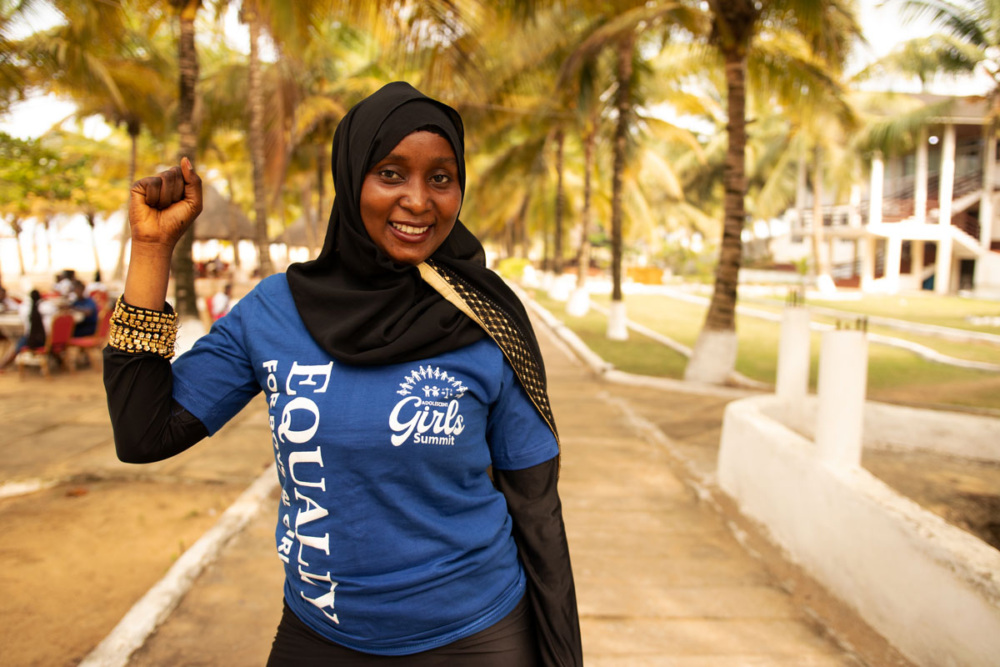
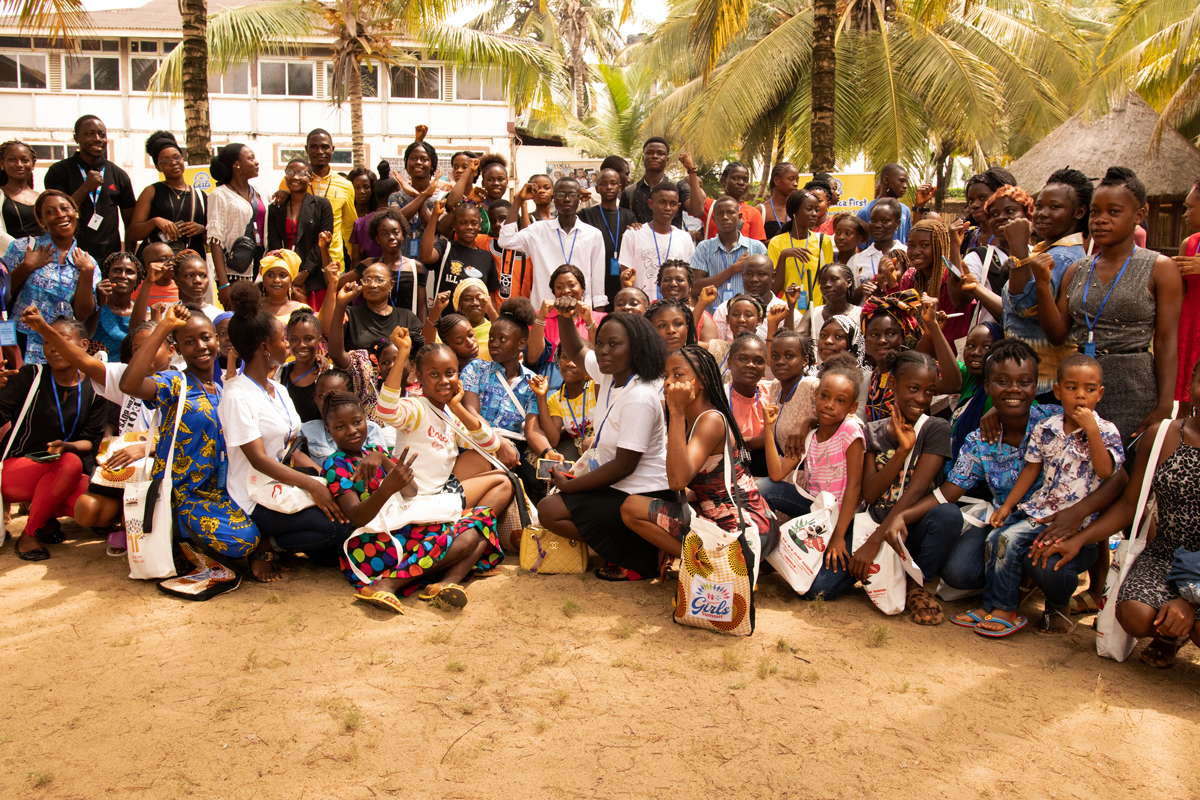
The Adolescent Girls Summit (AGS) is driving transformative impact across West Africa. Adolescents are gaining confidence, leadership, and advocacy skills; local organizations are designing structured, youth-led programs and centering adolescents in decision-making; and funders and peer networks are inspired to support adolescent-led gender justice initiatives. Through this multi-level impact, AGS is building a generation of young leaders shaping policies, communities, and movements for lasting change.
The Adolescent Girls Summit (AGS) has created lasting impact across West Africa, strengthening adolescents’ confidence, leadership, and advocacy skills. Girls and boys are now driving initiatives, influencing policy discussions, and sharing knowledge within their communities and beyond. Below are some of the key areas where the AGS has transformed their lives and futures.
1. Confidence and leadership development
Participants report significant boosts in self-confidence and leadership potential, with many taking on new roles in schools, communities, and organizations.
In Liberia, a 16-year-old from Community Healthcare Initiative became her school’s first female School Prefect and later founded It’s Girls Time, a peer group providing a safe space for adolescent girls.
Philipa speaking at the AGS
In Sierra Leone, Philipa, a 2024 participant from CFN Kenema, was elected National President of the Children’s Forum Network
As a leader, you must know and accept who you are before leading others... This is our time—claim your space, recognize your power, and believe in your ability to change the world.
Adolescent girl participant, 2024 AGS, Monrovia
2. Adolescent-led advocacy
The AGS acts as a launchpad for youth-led advocacy. Each year, adolescents produce a Call-to-Action (CTA) document outlining concrete responsibilities for families, schools, governments, and regional bodies like ECOWAS, the AU, and the UN.
In Côte d’Ivoire(2023), adolescents hosted a stakeholders dialogue with local leaders to present their concerns and demand action.
In Liberia(2025), young people collaborated with the Ministry of Gender, Children, and Social Protection to convene a national dialogue uniting government, schools, and civil society to address challenges facing girls.
3. Recognition and career advancement
The AGS has helped young leaders gain national and international recognition for their advocacy and innovation.
Michael Nabieu, co-founder of FAIECY-SL and AGS facilitator, was
Michael Nabieu was selected for the 2024 Mandela Washington Fellowship.
selected for the 2024 Mandela Washington Fellowship.
In Nigeria, Favour Unoh, the 2024 AGS Ambassador, won the top prize at the SAYPHIN Conference for her national speech on youth and women’s rights.
4. Education and shared learning
After the summit, adolescents become peer educators, spreading knowledge on gender justice, leadership, and health to their schools and communities.
In Sierra Leone, girls with speech impairments from All4All led sessions on Sexual and Reproductive Health and Rights, advocating for girls with disabilities.
The Adolescent Influencers Movement organized a menstrual hygiene month event in 2024, sharing local innovations like reusable pads (Sierra Leone) and Padbanks (Nigeria).
Adolescents are also using media to amplify their voices:
Nigeria: Eniola Dorcas created a YouTube video on Comprehensive Sexuality Education.
Liberia: Klay Tina shared lessons from the AGS on Voice of Sinoe Community Radio.
Ghana: Sedinam Asase and Janet Appiah appeared on Ghana Broadcasting Corporation’s Women’s Voices program.
One of the most inspiring stories comes from Sierra Leone, where Gitta Brima educated her grandmother – an influential community practitioner – about the harms of Female Genital Mutilation (FGM). Her grandmother chose to abandon the practice, sparking change across the community.
Impact on partners and local organizations
1. Structured adolescent girls’ and boys’ programs
Through the Adolescent Girls Summit initiative, local organizations have become more intentional about designing structured, holistic empowerment programs. Instead of one-time activities, partners now run continuous, youth-led programs that create lasting impact. These programs include facilitator guides, evidence-based manuals, and participatory methods that help adolescents actively engage, learn, and lead – fostering the skills and confidence they need to shape their own futures. In Sierra Leone, GFC partner Center for Advocacy and Sustainable Empowerment(CASE), created the Teen Talk program, offering adolescent girls ongoing access to information, coaching, mentorship, and leadership development opportunities.
2. Centering adolescents in decision-making
The AGS has encouraged organizations to place adolescents at the heart of their governance and programming. Partners have strengthened safeguarding practices, trained staff to better support young people, and adopted inclusive systems that enable their participation. Many now involve adolescents directly in decision-making – some by creating Adolescent Councils to guide program design, others by inviting youth representatives to join their Boards of Advisors – ensuring their voices shape organizational priorities.
3. Building networks and partnerships for greater impact
The AGS also serves as a powerful platform for collaboration and visibility, connecting local organizations with funders, networks, and peers to expand their impact. Through the 2024 AGS, Junior Achievement Africa (JA-Africa) partnered with CASE in Sierra Leone, resulting in new funding and the Social Equity Program(SEP), which now delivers entrepreneurship and business training to 3,500+ youth nationwide. In Liberia, AGS participants formed the Amplifying Rights Network (ARN) – supported by the Swedish Embassy, RFSU, and others – to advance women’s and girls’ rights. Together, they’ve hosted national SRHR Conferences in 2023 and 2025, strengthening advocacy for gender equality.
Impact on movements, funders, and peer organizations
1. Meaningful adolescent leadership in gender justice
Through the Adolescent Girls Summit (AGS), Global Fund for Children and partners are showing what true adolescent leadership in gender justice looks like. Unlike many events, every stage of the AGS – from planning to facilitation – is led by adolescents and youth, with adults offering only guidance.
I have never been in a platform where 80% of participants are adolescents, my peers... The feeling of me as an adolescent owning the space was extraordinary.
Adolescent girl participant, inaugural AGS
2. Inspiring funders to support adolescent-led initiatives
A major outcome of the AGS has been its influence on funders and peer organizations to back adolescent-led programming. Inspired by the 2024 AGS, UNICEF organized a Regional Adolescent Girls Conference across West and Central Africa, following national consultations that elevated the voices of adolescents aged 10–19 – often overlooked in traditional youth forums.
3. Building cross-regional connections and movements
The AGS has also sparked connections and collective action among adolescents across countries and programs. GFC is nurturing the Adolescent Influencers Movement, uniting young people to coordinate advocacy, share experiences, and influence policies that advance the rights and well-being of adolescent girls across the region. This inclusive, youth-driven movement connects girls and boys from diverse backgrounds through partnerships with multiple organizations that jointly contribute funding and expertise – ensuring sustainability and shared ownership.
The AGS has provided a platform where the aspirations, challenges, and resilience of adolescent girls are not only acknowledged but celebrated.
Dorah Muhanuuzi, Fund for Global Human Rights, 2024 AGS