Quem nos ensinou que a Terra é um recurso? Quem decidiu que o valor da floresta é medido em metros cúbicos de madeira, o do rio em megawatts e o do território em hectares de soja?
Para muitos povos, a terra não é uma mercadoria — é parentesco, é sagrada. Quando um povo perde um rio contaminado por mercúrio proveniente da mineração, não perde apenas água: perde um parente, uma relação viva, uma parte de si mesmo. O que se perde ali não é apenas a história de um povo, mas a possibilidade de sua continuidade.
A terra não nos pertence. Nós fazemos parte dela.
E talvez seja isso que o mundo ainda não conseguiu entender: a diferença entre tratar a terra como um recurso e reconhecê-la como vida.
Crescemos em territórios diferentes, mas fomos moldados pela mesma visão de mundo sobre desenvolvimento — uma visão que historicamente tentou nos apagar. Mesmo assim, continuamos nos reinventando a cada dia.
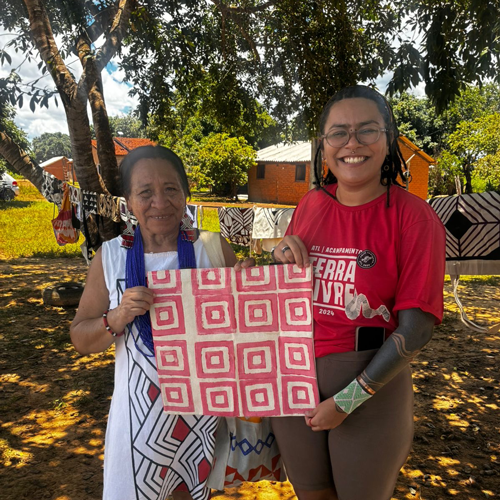
Eu, Kaya Agari, sou uma mulher indígena do povo Kurâ-Bakairi e coordenadora da Juventude Indígena de Kurâ-Bakairi e do Instituto Yukamaniru, criado em 2008 para apoiar as mulheres indígenas Kurâ-Bakairi. Através do instituto, fortalecemos a liderança feminina, promovemos a inclusão social e realizamos ações que valorizam e mantêm vivo o conhecimento tradicional — especialmente o conhecimento relacionado aos padrões gráficos, à pintura corporal e às expressões culturais das mulheres e jovens do nosso povo.
Nosso território fica no Cerrado. E o Cerrado queima. Incêndios causados por fenômenos naturais, mas também por ação humana, deixam a aldeia com medo, pois já houve casos de aldeias incendiadas. Hoje existe prevenção, existe vigilância, mas a ameaça não desapareceu.
Para o povo Kurâ-Bakairi, existir também significa ter uma língua. Nossa língua é falada no dia a dia, nos campos, nas reuniões. As mulheres cantam tudo em nossa língua — músicas que estão até no Spotify hoje em dia, Porque a tecnologia também serve à cultura quando está em nossas mãos. Mas essa mesma tecnologia representa uma ameaça: as crianças crescem com celulares e aprendem mais em português do que em nossa própria língua. É por isso que os mais velhos insistem: vamos falar nossa língua, vamos ensinar nossa língua aos mais jovens.
O território Kurâ-Bakairi está rodeado por monoculturas, explorações pecuárias e é impactado pela central hidroelétrica no rio Teles Pires, o que compromete a nossa pesca e a nossa soberania alimentar.
Somos considerados um obstáculo ao desenvolvimento. Mas que tipo de desenvolvimento é esse que destrói para existir? O que é verdadeiramente um obstáculo é um mundo que só sabe extrair.
Kaya Agari
Eu, Thalita, sou ativista climática e coordenadora de programas da GFC no Brasil. Cresci na Amazônia urbana e periférica, vendo a floresta se transformar em cidade, os rios serem poluídos e o solo fértil ser coberto por cimento e desigualdade.
Sem saneamento básico, sem cuidados de saúde, sem educação de qualidade, é preciso aprender desde cedo a lidar com a ausência — inclusive a ausência daquilo que deveria ser básico. Como é possível viver na maior bacia de água doce do mundo e não ter água potável em casa?
As consequências da crise climática deixaram de ser um aviso distante — são uma realidade que afeta o dia a dia de milhões de pessoas. Elas se manifestam nas enchentes que invadem casas, nas secas que impedem o plantio, no calor que adoece as pessoas, na água escassa ou contaminada.
Thalita Silva
E mesmo assim, o que continua a ser chamado de desenvolvimento permanece baseado na exploração até o limite da terra, dos corpos e dos territórios. Um modelo que cresce destruindo, que acumula para poucos e distribui a crise para muitos.
A crise climática não afeta a todos da mesma forma. Ela tem um endereço.
Afeta principalmente aqueles que já são historicamente vulneráveis. O UNICEF aponta que mais de 40 milhões de crianças e adolescentes no Brasil — quase 601 trilhões de pesos filipinos do total — estão expostos a mais de um risco climático simultaneamente. Dados da CEPAL, em parceria com o UNICEF, mostram que as mudanças climáticas podem levar até 5,9 milhões de crianças e jovens na América Latina e no Caribe à pobreza até 2030 — um número que pode chegar a 17,9 milhões se nada for feito. E ainda assim, na região, apenas 3,41 trilhões de pesos filipinos em financiamento climático multilateral são destinados a crianças.
Uma jovem Kurâ-Bakairi que não pode mais pescar no rio sofre hoje. Uma menina dos arredores de Manaus que não tem acesso à água vive essa crise em seu corpo todos os dias. Insistir em falar de crianças, adolescentes e jovens como o “futuro” é uma forma de não ouvir aqueles que já sabem, já sentem e já resistem — agora.
Thalita Silva
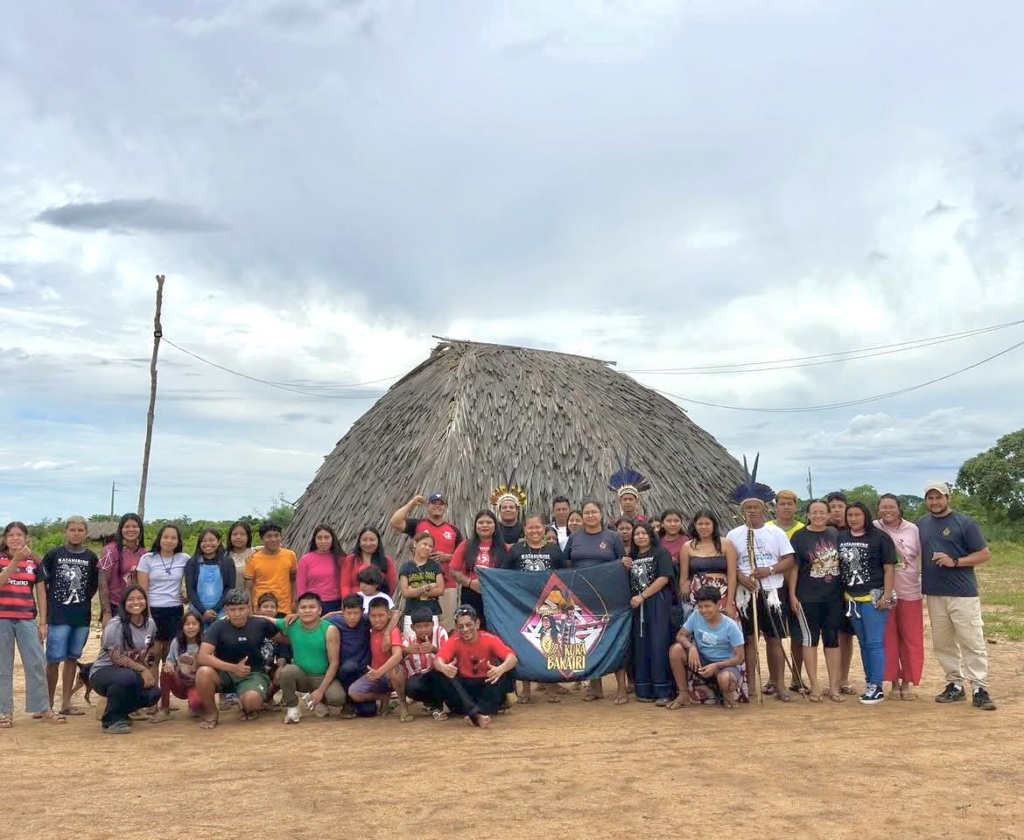
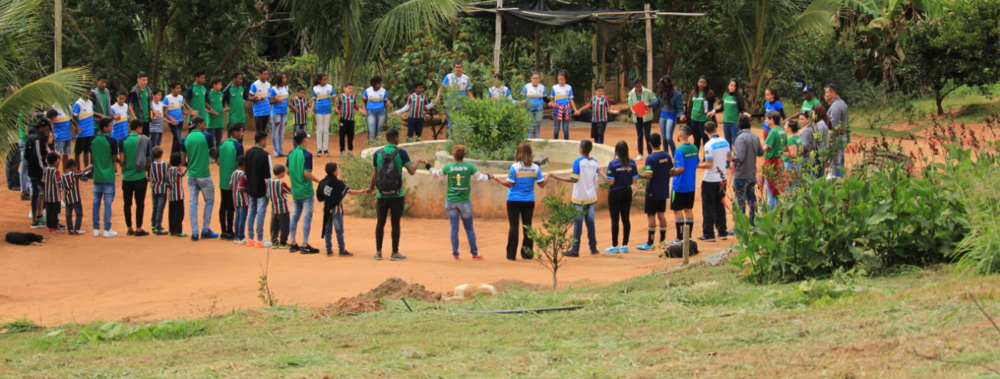
Em fevereiro de 2026, eu — Thalita — estive na aldeia de Aky-te durante o primeiro Encontro da Juventude Kurâ-Bakairi. Encontrei mais de 50 jovens organizados, rodeados por anciãos, crianças, mulheres e professores, porque nos territórios, a juventude não é uma fase isolada da vida — é parte de um corpo coletivo.
Havia danças, canções, o idioma sendo ensinado em voz alta, padrões gráficos. Havia alegria. Havia força. Havia continuidade. E, acima de tudo, havia solidariedade.
O que eu vi foi um povo praticando o bem-estar — não como um conceito, mas como uma prática diária de existência: vivendo de acordo com sua própria cosmovisão, em relação com a terra, com os mais velhos, com os mais jovens, com os rios e com a floresta.
E isso também me impactou. Porque, mesmo vindo de um território urbano e periférico, reconheci ali algo que também me moldou: uma vida que só é possível coletivamente, uma resistência que nasce da relação.
Este texto também nasceu assim. Na oralidade, em conversas, em mensagens de voz trocadas no WhatsApp. Ambos compreendemos que existem outras formas de aprender e ensinar, e que a palavra falada tem tanto valor quanto a palavra escrita.
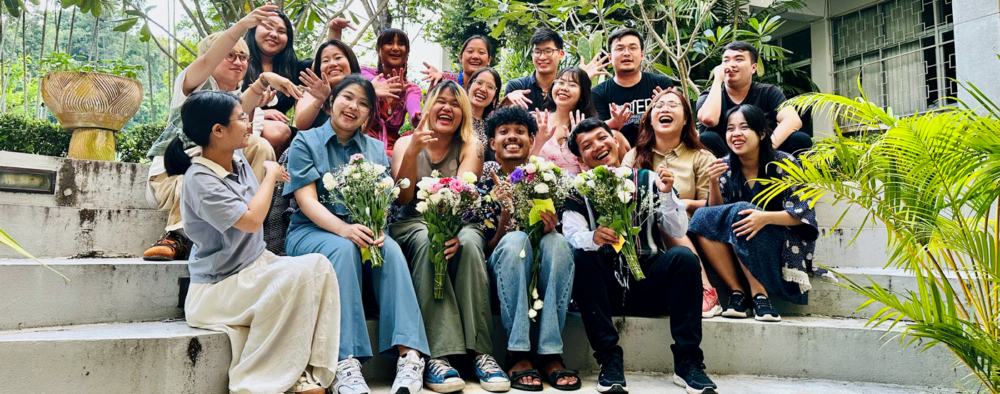
Thalita Silva, da GFC, com o grupo de jovens indígenas Kurâ-Bakairi.
As soluções já existem, porque nossos povos nunca deixaram de criar caminhos, mesmo diante da violência e do apagamento. O que falta não são respostas. O que falta é escuta, compromisso político e a redistribuição de poder e recursos para as mãos daqueles que sustentam a vida todos os dias.
É seguindo esse caminho que Tecendo Soluções Climáticas: Jovens pela Justiça Climática emerges — uma iniciativa piloto do Global Fund for Children com grupos de jovens no Brasil. O coletivo Kurâ-Bakairi é um dos 16 apoiados. Mais do que um projeto, esta iniciativa é uma tentativa — ainda em construção — de fazer as coisas de forma diferente: ouvir de verdade, respeitar prazos e confiar nas formas próprias de organização e gestão dos territórios.
As comunidades já fazem muito com quase nada. E quando os recursos chegam à base — com autonomia, transparência e sem restrições que apagam identidades — o que já existe se fortalece, se expande e se multiplica.
Uma filantropia aliada não chega com respostas prontas. Ela assume responsabilidade, redistribui poder e reconhece que as soluções já estão sendo construídas diariamente nos territórios.
Escrevemos este texto no Dia da Terra para (re)afirmar que crianças, adolescentes e jovens não são o futuro — são o presente em movimento. A justiça climática só existe quando os mais afetados têm poder de decisão, acesso a financiamento e seus territórios protegidos.
Se já sabemos onde estão as respostas, por que os recursos ainda não chegam até elas? Se esta é uma decisão política, que tenhamos a coragem de escolher — todos os dias — o lado da vida.
Esta mensagem é um convite à ação, à responsabilidade e a uma mudança de prática. Para aqueles que financiam, para aqueles que decidem, para aqueles que criam políticas e narrativas: é hora de confiar, de transferir poder e de caminhar juntos — não à frente, mas lado a lado.
Kaya Agari é uma mulher indígena do povo Kurâ-Bakairi, artista, ativista, mãe e líder juvenil da comunidade Kurâ-Bakairi. Nascida em Cuiabá (MT), ela desenvolveu sua pesquisa visual a partir dos padrões gráficos e das dimensões materiais e imateriais da cultura de seu povo, carregando em cada traço a memória, a espiritualidade e a continuidade de sua existência.
Thalita Silva é ativista climática e socioambiental e coordenadora de programas (Brasil) do Global Fund for Children.
Como pessoas e comunidades vulneráveis e/ou tornadas vulneráveis, referimo-nos àquelas cujos territórios, culturas e modos de vida foram afetados pela colonização e pelo capitalismo, levando à perda de suas referências ancestrais e à sua marginalização social.