Back the Future Leaders: How and why to fund individual young people
At Global Fund for Children, we’ve spent years learning how to resource young people directly. Here’s what we’ve learned about doing it responsibly, and where funders may need to work differently.
Young people are leading change. Philanthropy needs to catch up.
Young people are organizing, building movements, and responding to challenges in their communities long before they turn 18 or establish formal organizations. Yet, philanthropic systems are rarely designed to fund them directly.
GFC has spent the past five years testing and adapting approaches to funding young people across Asia Pacific and Europe and Central Asia. This experience has shaped our understanding of what it takes to fund individual young people responsibly.
Funding individual young people requires more than finding a way to transfer money. Funders need to consider how their systems accommodate young people’s circumstances, from financial management and safeguarding to grant timelines and ongoing support.
And while a grant may go to one individual, their leadership rarely happens alone. Young people often rely on networks of peers, family members, youth workers, teachers and community leaders. Funding responsibly means recognizing the relationships and infrastructure that help them lead change, too.
If we want young people not only to deliver a project, but to grow as changemakers and take their ideas further, we need to invest in the person as well as the idea. Sometimes the most valuable thing we can provide, alongside the funding, is the reassurance that they don't have to figure everything out alone.
Conor Forker, Young Gamechangers Fund Project Officer, Global Fund for Children
GFC’s experience of funding young people in different ways
Over the last five years, GFC has tested and adapted approaches to resourcing young people across Asia Pacific and Europe and Central Asia. Through participatory grantmaking initiatives like the Spark Fund in Southeast Asia, the Strength of Girls initiative in Mexico, and the Young Gamechangers Fund and the Phoenix Way in the United Kingdom, we have evolved from funding registered organizations and informal groups to providing funding directly to individual young people, including those under 18.
This experience has highlighted the importance of adapting funding processes, financial support and ongoing accompaniment to young people’s circumstances—and investing in the relationships and infrastructure that help them lead change.
👇 Explore our initiatives below.
The Spark Fund
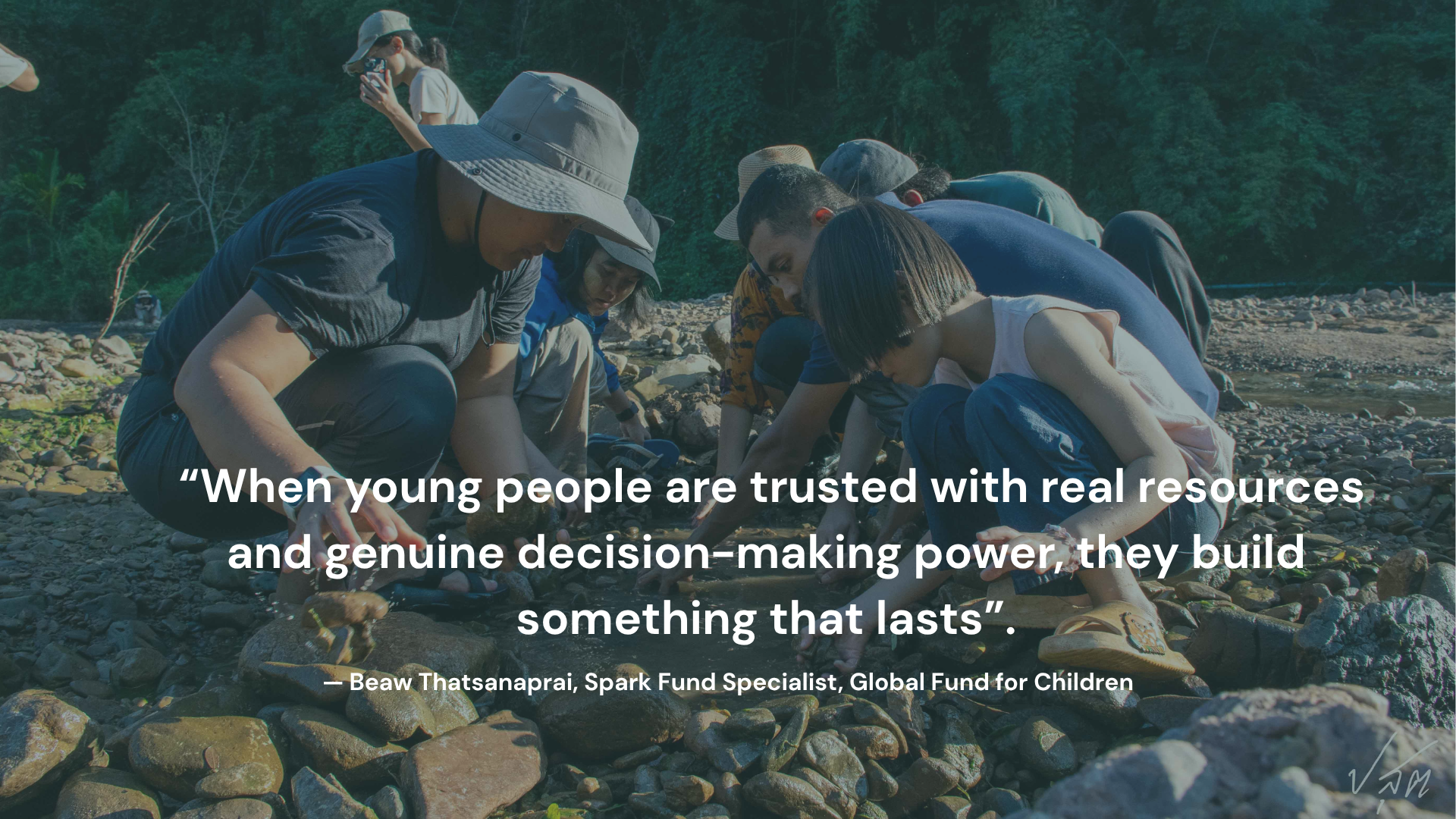
The Spark Fund puts young people at the centre of grantmaking. Young people design application processes, set grantmaking criteria and decide which youth-led and youth-focused groups receive funding. The fund also provides flexible grants, capacity development and opportunities for young leaders to connect and learn from one another.
In Yucatán, Mexico, GFC supports grassroots organizations working to advance the rights, agency and leadership of Mayan girls and young women. Through multi-year flexible grants and capacity development, the initiative supports community-based work that helps girls exercise their rights, access education and opportunities, and challenge gender barriers.
The Young Gamechangers Fund provided grants directly to young people aged 10–25 in the UK, as well as to youth-led groups and organizations, to help them make their communities safer, more sustainable and more inclusive. Young people helped design the fund and shape its grantmaking decisions.
The Phoenix Way is a grantmaking initiative led by The Ubele Initiative and supported by GFC that worked to transform funding for Black and racially minoritised communities in England. Developed with six regional partners, the initiative used participatory grantmaking to put community knowledge and leadership at the centre of funding decisions.
Funding individual young people isn’t about taking bigger risks. It’s about reaching leaders who are already making change but don’t yet have a group or organisation around them. With the right support in place, a grant to one young person can open a door that no other funding route would have reached, and often it’s the start of something much bigger.
Nasra Ayub, Programs Officer, Global Fund for Children
What GFC has learned about funding individual young people
The experience across these initiatives has shown GFC that funding young people directly requires more than adapting how grants are paid. It calls for tailored financial and practical support, flexibility around young people’s circumstances, trusted relationships and ongoing accompaniment, and planning for what happens when funding ends.
The lessons below draw on GFC’s experience and highlight areas funders may need to approach differently when resourcing individual young people.
Tailored support from the outset
Young people may need help navigating payment methods, opening bank accounts, budgeting, bookkeeping and potential tax or benefits implications. Funders need to provide support that responds to each person's circumstances.
Flexibility around young people's lives
Education, employment, family, and caring responsibilities all compete for young people's time. Onboarding, grant management, communication, and reporting need to accommodate these realities.
Consistent relationships and accompaniment
Individual grantees may not have colleagues to share decisions or the emotional load. Regular check-ins, peer connections, and trusted support networks can help young people navigate the challenges of leading work independently.
When I became a Spark Fund Grantee, it changed my life. For two years, I had stability, community, and resources to pursue what I truly cared about.
Quynh Huong, Spark Fund Fellow
Not every funder needs to do this directly
Funding individual young people well requires institutional commitment: flexible financial systems, safeguarding expertise, staff capacity and ongoing accompaniment.
Funders that aren’t set up to provide this support themselves can work with experienced intermediaries, youth funders, and feminist funders that already have the relationships, systems and expertise needed to resource young people responsibly.
The important question isn’t simply whether a funder can make a grant to an individual. It’s what will ensure young people can access resources safely, flexibly and on their own terms — and what role each funder is best placed to play.
Ready to put this into practice?
Young people are already organizing and leading. The opportunity for philanthropy is to recognize it, resource it, and change our own systems where they stand in its way.
Our full brief shares eight lessons from GFC’s experience and a practical checklist for funders considering how to support individual young people responsibly.